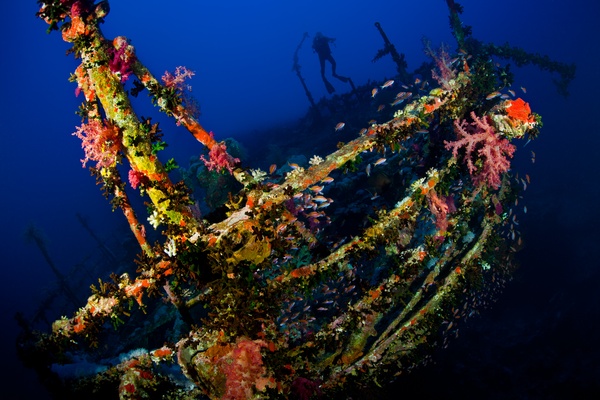
My Big Five for Life
In The Big Five for Life, John Strelecky asks a simple question: if your life were a safari, which five experiences would define it? The idea stuck with me: not as a checklist, but as a compass.
I was eight when the ocean claimed me. Hovering weightless in the Red Sea, watching a parrotfish graze on coral. At twelve, forty hammerheads at Elphinstone turned fascination into obsession. Three decades and thousands of dives later, five destinations stand apart. They are among the best dive sites I’ve ever experienced. But they made this list because something happened there that shaped my life beyond diving.
These are my Big Five for Life. Underwater.
Raja Ampat, Indonesia
As a teenager, a diving veteran told me Raja Ampat was the most beautiful place on earth to dive. It seemed unreachable. The kind of destination that existed only in other people’s stories. In 2011, in my early twenties, I finally went.
Five flights from Germany to Sorong. After Jakarta, the adventure began in earnest. Nobody spoke English, and I don’t speak Indonesian. When I had to spend the night in a closed domestic airport, I met strangers who became allies. We couldn’t share a single word, but we connected through gestures, smiles, shared food. Later, those same people rescued me from a transit disaster involving the wrong ticket and a language barrier no one could bridge. They made sure I got on that plane.
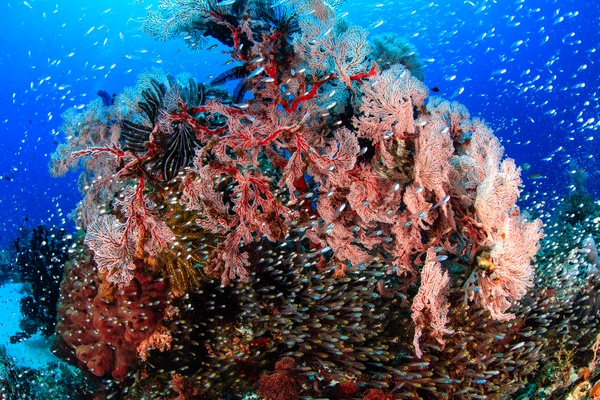
My dream came true. Raja Ampat in 2011 was virtually untouched. Only a handful of liveaboards operating across 40,000 square kilometers of ocean. Over three weeks I sailed through hundreds of limestone islands surrounded by reefs holding 600 coral species and over 1,300 fish species. Manta rays glided past wobbegong sharks resting on the sand. Critters I’d never seen before appeared on every dive. This is the epicenter of marine biodiversity. Seventy-five percent of all known coral species exist here, and I had it almost to myself.
Twelve years later, I returned. Not alone this time. Five close friends I’d met across years of diving adventures. We booked the Wellenreng and had the trip to ourselves. A lot had changed in those twelve years. More boats, more divers, more awareness. But one thing remained: Raja Ampat is a place that rearranges something inside you. It did it when I was twenty-something, and it did it again in my late thirties.
Cocos Island, Costa Rica
Five hundred and fifty kilometers off Costa Rica’s Pacific coast. Thirty-six hours by liveaboard. No airport, no residents except park rangers. UNESCO World Heritage since 1997, and one of the last places on Earth where the ocean still feels like it belongs to the sharks.
This trip was the last official expedition combining Cocos and Malpelo in one journey. I knew it was special for another reason too: the biggest adventure of my life was waiting just a few months away. The birth of my older daughter. One last grand trip before everything changed.
Alcyone delivered what legends promise. I knelt alone on the rocky bottom, feeling my heartbeat, hearing nothing but my own bubbles. Then the wall appeared. Hundreds of scalloped hammerheads passing a few meters above me, unhurried, endless. They kept coming for what felt like minutes. At Dirty Rock, the schools were so dense they blocked the light. Cleaning stations revealed a different side: hammerheads hovering motionless, trusting small fish to pick parasites from their skin.
Then the nights. Hundreds of whitetip reef sharks hunting in packs across the reef, their eyes catching our torchlight. Galapagos sharks cruising through like uninvited guests who own the room. A tiger shark appearing close enough to count its stripes.
Above water, I hiked trails through cloud forest. Cocos is as wild on land as below. Jacques Cousteau called it the most beautiful island in the world. There are stories of pirate gold buried somewhere in its volcanic soil. And then there was the friendship. We met on the same boat under circumstances so absurd we couldn’t stop laughing. By the end of the trip, I knew this person would stay in my life. He did. Adventure, sharks, mystery, and a close friend for life. Everything compressed into three weeks at the edge of the map.
Tahiti & Moorea, French Polynesia
The islands alone would be enough. Volcanic peaks rising from turquoise water, the kind of color you stop believing exists until you’re floating in it. But I didn’t come for the scenery.
I came to freedive with humpback whales. They migrate to these warm, protected waters to give birth and nurse their calves before the long journey south.
On our first day, my buddy and I found a mother and calf. The calf was only a few days old. Both were reserved, watchful. We kept our distance, floating at the surface, observing from far. It felt like a privilege just to be in the same water.
We could have watched them forever. Then we started to listen. The water around them was full of song. Somewhere beyond sight, males were calling across kilometers, melodies looping for hours. You don’t just hear it in the water. The low calls hit your chest like a hammer, reach into your bones, set your whole body vibrating. Press play. This is what surrounded them and us.
While we listened, the mother and calf slipped into the deep blue. We didn’t expect to see them again. But the next day, there they were. And the day after. And the day after that. For twelve consecutive days, this mother and calf found us. Or we found them. Each day, the distance between us shrank. The mother’s caution softened into what I can only describe as trust.
After a week, the calf was swimming to within centimeters of us. It started mimicking our movements. When I did a roll, it did a roll. One afternoon, it extended its pectoral fin toward me. A high five. From a humpback whale calf, days old, choosing to play with a human.
I believe it recognized us. I can’t prove it scientifically. But twelve days of building trust, of the same two divers appearing each morning… something was there.
French Polynesia is also where the most important decision of my life found me. Some places don’t just show you beauty. They show you what matters next.
I’ll return here. My older daughter is already a confident snorkeler. The day she was born, I made her a promise: one day, she and I will float at the surface together, watching for the blow of a humpback on the horizon.
Galapagos, Ecuador
Since childhood, I dreamed of walking in Charles Darwin’s footsteps. In 2022, after two decades of diving the world, I finally sailed to the archipelago that rewrote our understanding of life on Earth.
Two weeks crossing between the most prestigious dive sites. Hammerhead sharks, whale sharks, pilot whales, playful sea lions. A Mola Mola I’d been chasing for years finally appeared. But none of it compared to the moment I’d been waiting for my entire dive life.
Marine iguanas. The only lizard on the planet adapted to life in the ocean, endemic to Galapagos, found nowhere else. I watched them slip off the rocks and glide effortlessly through the water, their flattened tails propelling them to the bottom to graze on algae. Darwin was fascinated by them in 1835. Nearly two hundred years later, so was I. So much so that I forgot the world around me. Over ninety minutes underwater, completely lost in watching them. The boat almost left without me. The crew was amused. So was I.
What makes Galapagos different is that you can see evolution. You feel it. Giant tortoises over 120 years old, sitting unchanged while the world transformed around them. Sea lions lumbering across your beach towel without a care. Everything here is a living chapter of a book written over millions of years.
I can’t wait to return. This time with my younger daughter, who loves turtles. Galapagos will be her place. I already know it.
Tubbataha Reef, Philippines
In thirty years of diving, I’ve seen reefs under pressure. Bleaching events, quieter seas, places that lost their spark. But I’ve also seen what’s possible when we get it right.
Tubbataha is that proof.
Protected as a National Marine Park since 1988 and UNESCO World Heritage since 1993, Tubbataha is 97,000 hectares of no-take zone in the heart of the Sulu Sea. But the numbers only tell part of it.
I remember one dive at thirty meters, holding position in strong current, when thirty sharks came through. Not hunting, not circling. Flying. Effortless in the flow, moving through clouds of jacks, trevally, and rays. When we finally let the current take us, it carried us straight past a wall of bumphead parrotfish, massive and unhurried, grazing the reef like they owned it. Hard corals stretching further than visibility allowed. Nature in balance, the way it’s supposed to be.
That is what Tubbataha gave me. Not a single animal encounter, not one dramatic moment. The whole picture, working. A living example of what the ocean can still become if we protect it properly and enforce those protections without exception.
I’ll bring my daughters here when they’re older. This reef deserves to be seen by the people who will inherit it.
Where It All Began
The Red Sea doesn’t appear in my Big Five. Not because it doesn’t deserve to. It does. But its place in my life is different. Deeper. More constant.
I was eight years old when I first put my head underwater in the Red Sea. That moment ignited everything that followed. Hundreds of dives across its reefs, year after year. It became less a destination and more a home.
Now I return with a different focus. My daughters snorkel beside me over the same reefs where I learned to dive. I watch their eyes go wide behind their masks. The same wonder I felt at eight. They’ve fallen in love with the sea, especially with the Red Sea.
I couldn’t be prouder.
Some places don’t need to be on a list. They’re the foundation the list is built on.
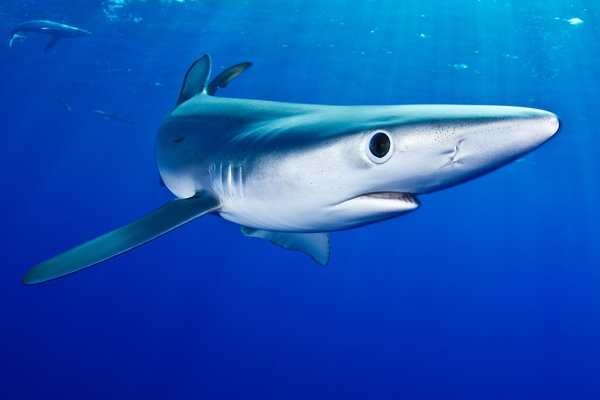
Sharks
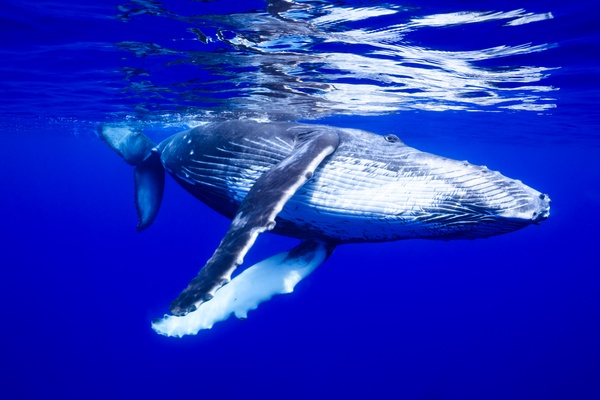
Gentle Giants
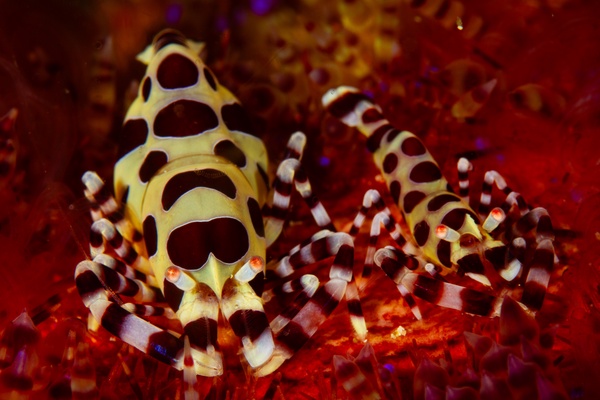
Macro Critters
Reef & Corals
Caves