Caves
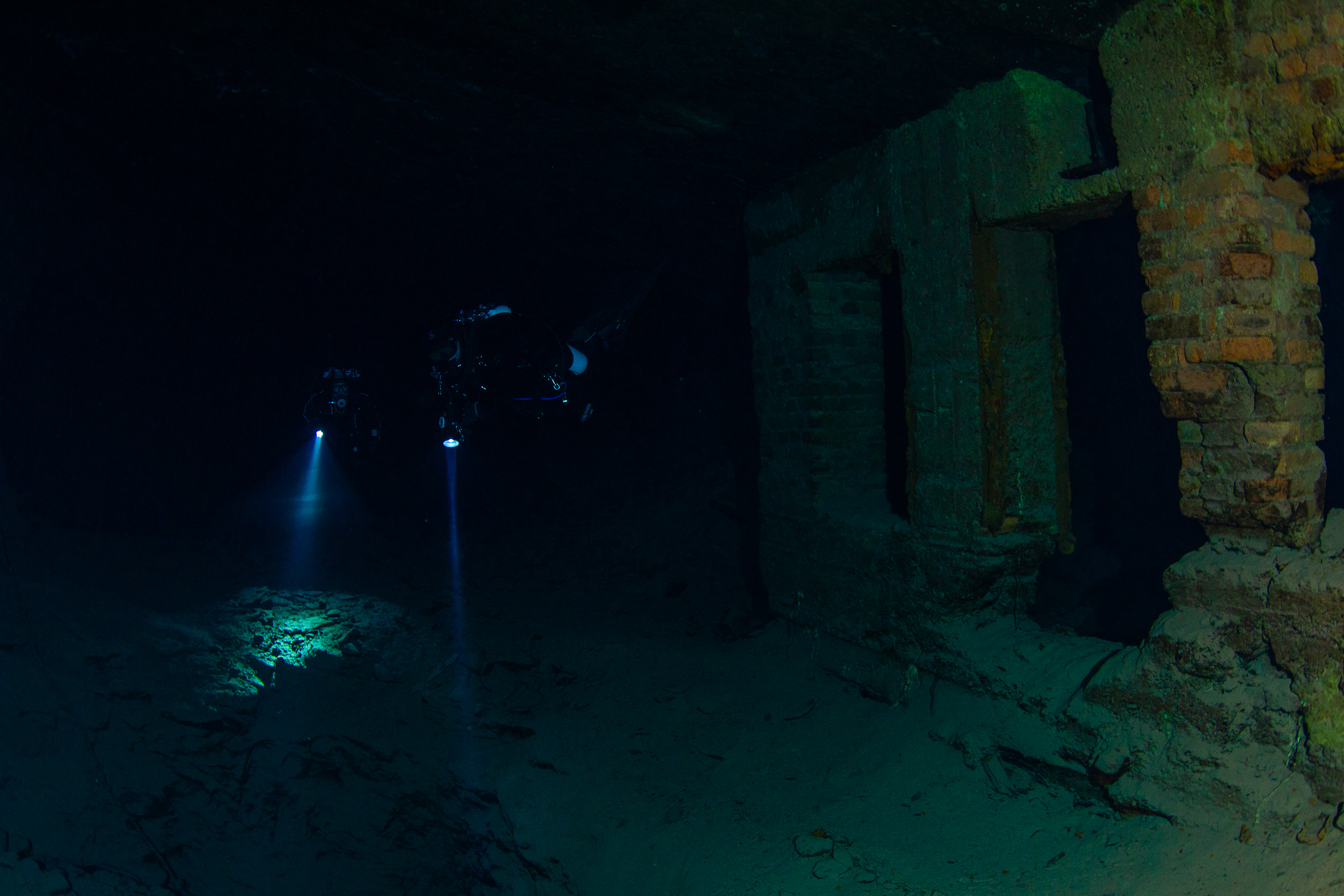
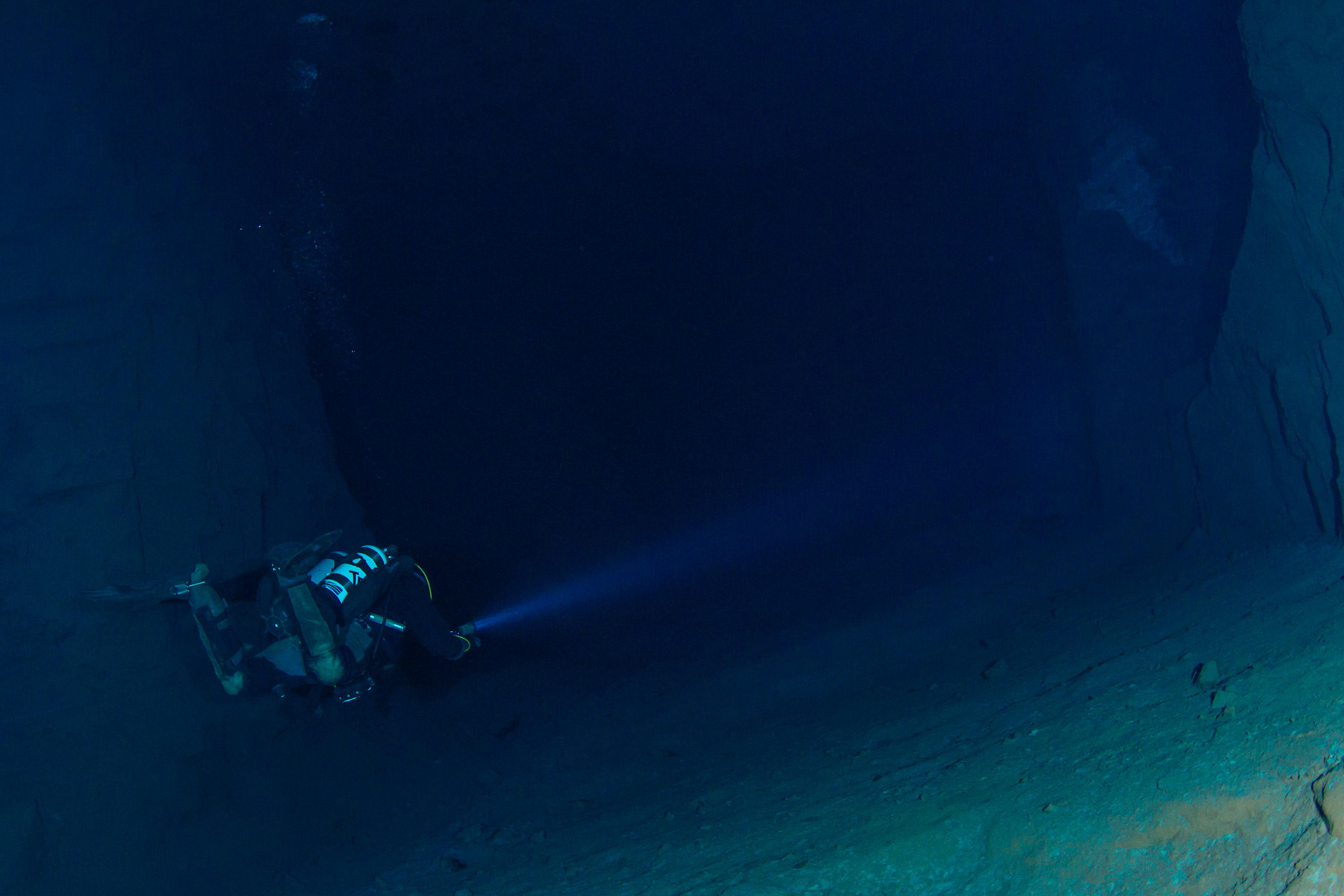
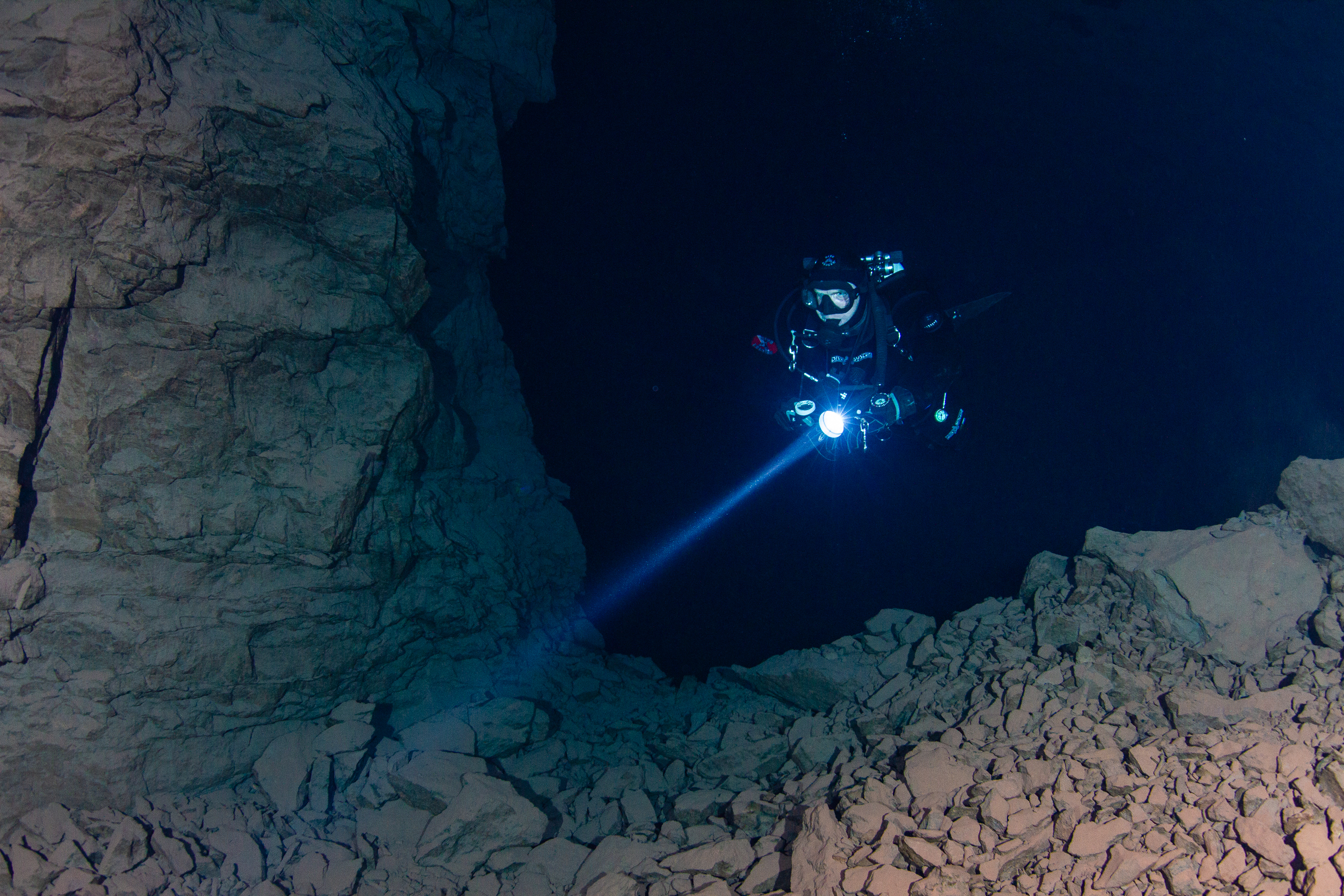
Caves hit different. Dark, closed, every breath counts. This gallery is the silence and beauty that waits past the discipline: stalactites in Yucatán cenotes, light beams through limestone, volcanic overhangs in the Azores and Malpelo, and mine diving at Kleinenbremen in Porta Westfalica, Germany.




Where the silence takes over
Caves hit different. Dark, closed, explored by a handful of people. No surfacing when you want to. Every breath counts, every fin stroke matters. The discipline is part of the draw, but what keeps me coming back is what waits past it: silence so complete the dive becomes internal, and a kind of beauty that needs no animal, no coral, no color to justify itself.
A completely different underwater world. Not reef diving in a darker room. Stalactites that took thousands of years to form, endless visibility that makes distance impossible to judge, and light beams cutting through limestone passages like they were placed there on purpose.
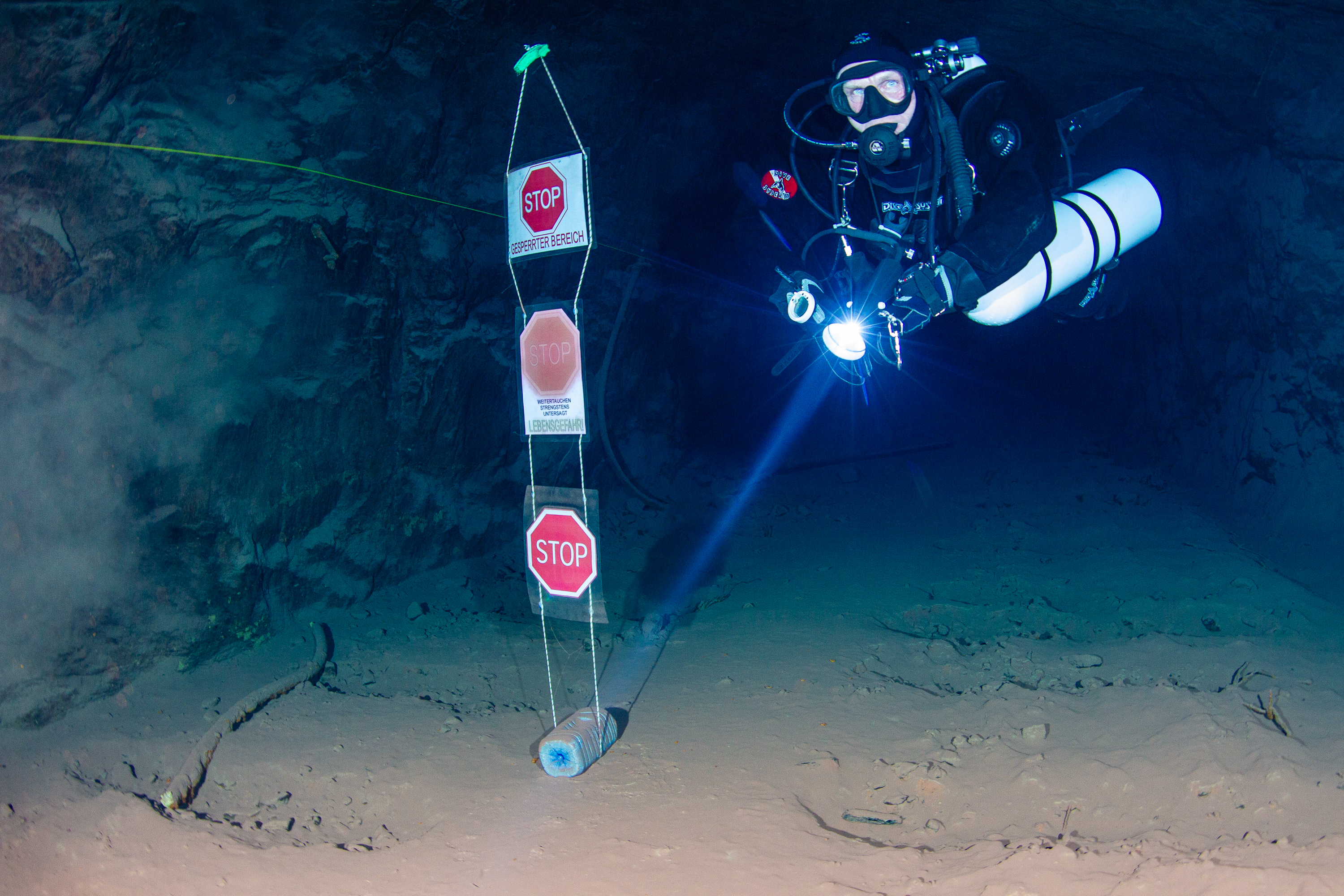
Most of these photographs come from the cenote systems around Playa del Carmen in Mexico’s Yucatan, plus mine diving at Kleinenbremen in Porta Westfalica, Germany. The water is fresh, absurdly clear, layered with haloclines and tannic bands that shift the light from blue to gold to black within a single passage, and the mine dive at Kleinenbremen adds a very different kind of silence: cold, dark, and full of old stone. Every fin kick sounds louder down here. Every torch beam has an edge. The Galapagos adds another register: narrow rock canyons where a diver floats between volcanic walls with blue light pouring from above, open sky overhead but the same feeling of being held inside something.
The cave image I’m after
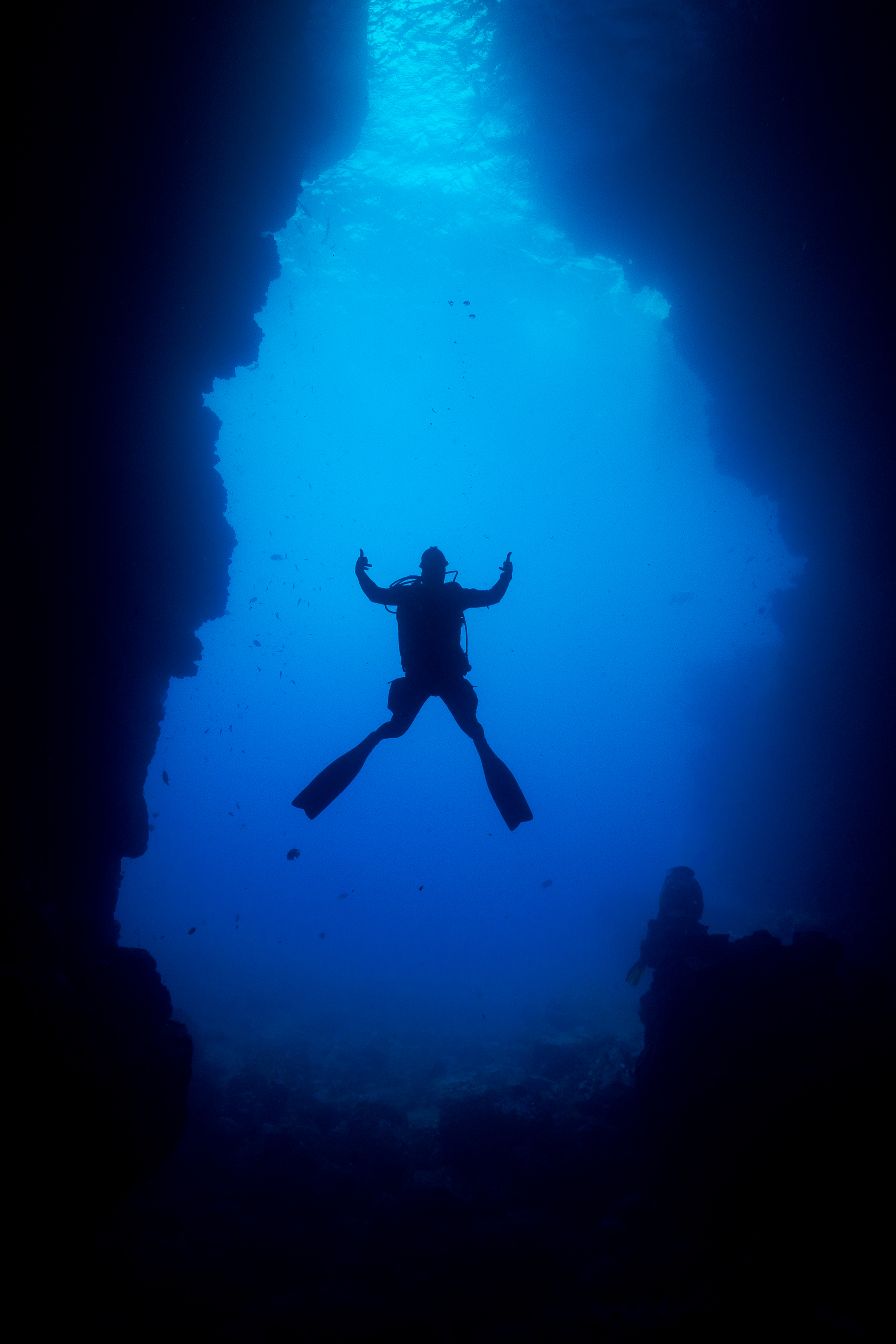
Not drama. Stillness. One diver suspended in a passage, small against the rock. One beam of light finding its way through a ceiling opening. The darkness around the frame doing as much work as the light inside it.
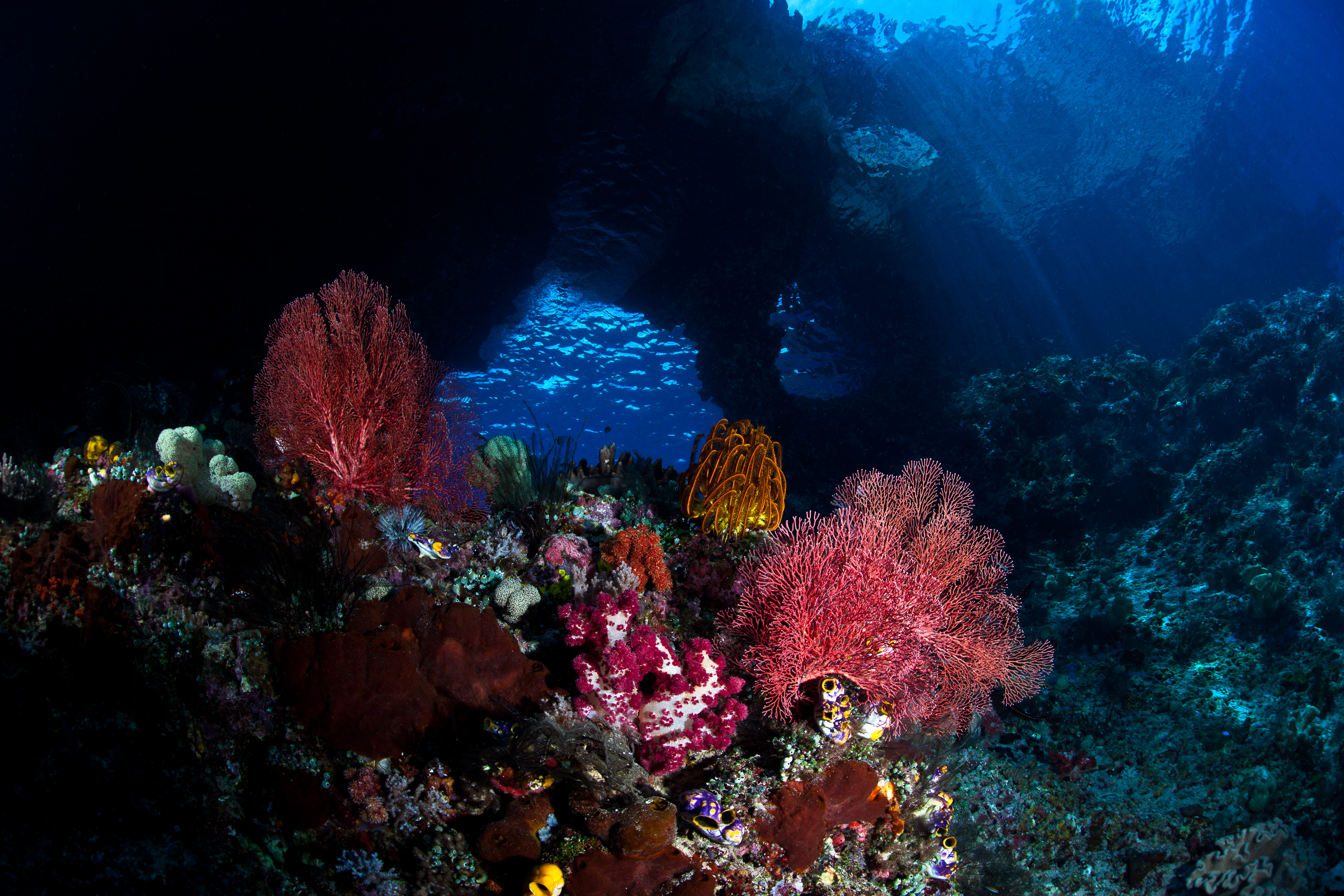
In the Azores and Malpelo, volcanic overhangs and ocean caverns add a rougher edge to the same idea: blue water above, black space below, a diver caught between both. Kleinenbremen brings the same feeling into an old mine setting in Porta Westfalica, where the flooded tunnels and blue lake feel like a completely different kind of cave diving. These images sit at the opposite end of the spectrum from Reef & Corals and Macro Critters, but the patience they ask for is the same. More about where cave diving fits in the wider journey on the About page and in My Big Five for Life. The best cave dives end with nothing but the sound of your own breathing. That is the reward.
Explore More Galleries
Wrecks