Wrecks
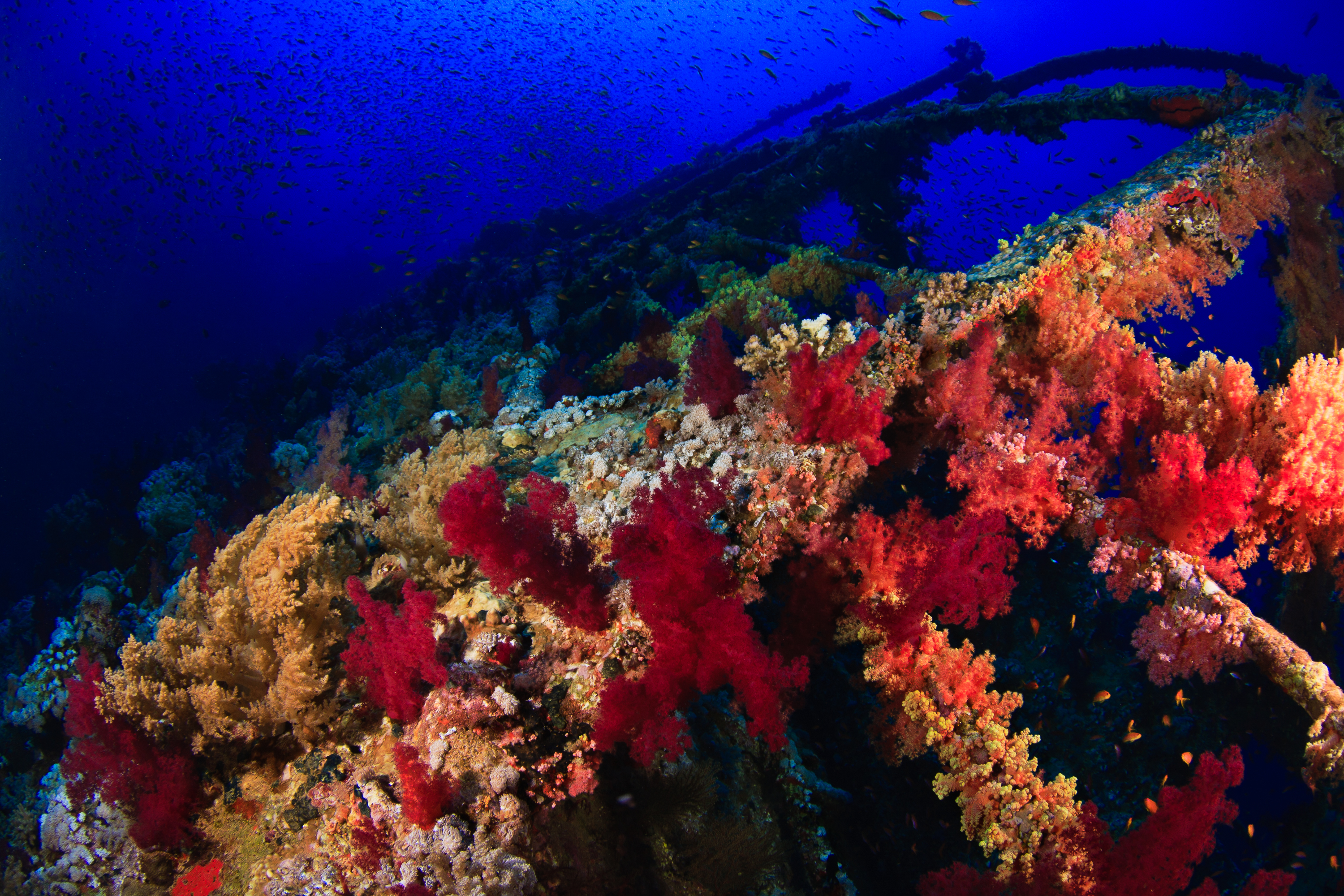
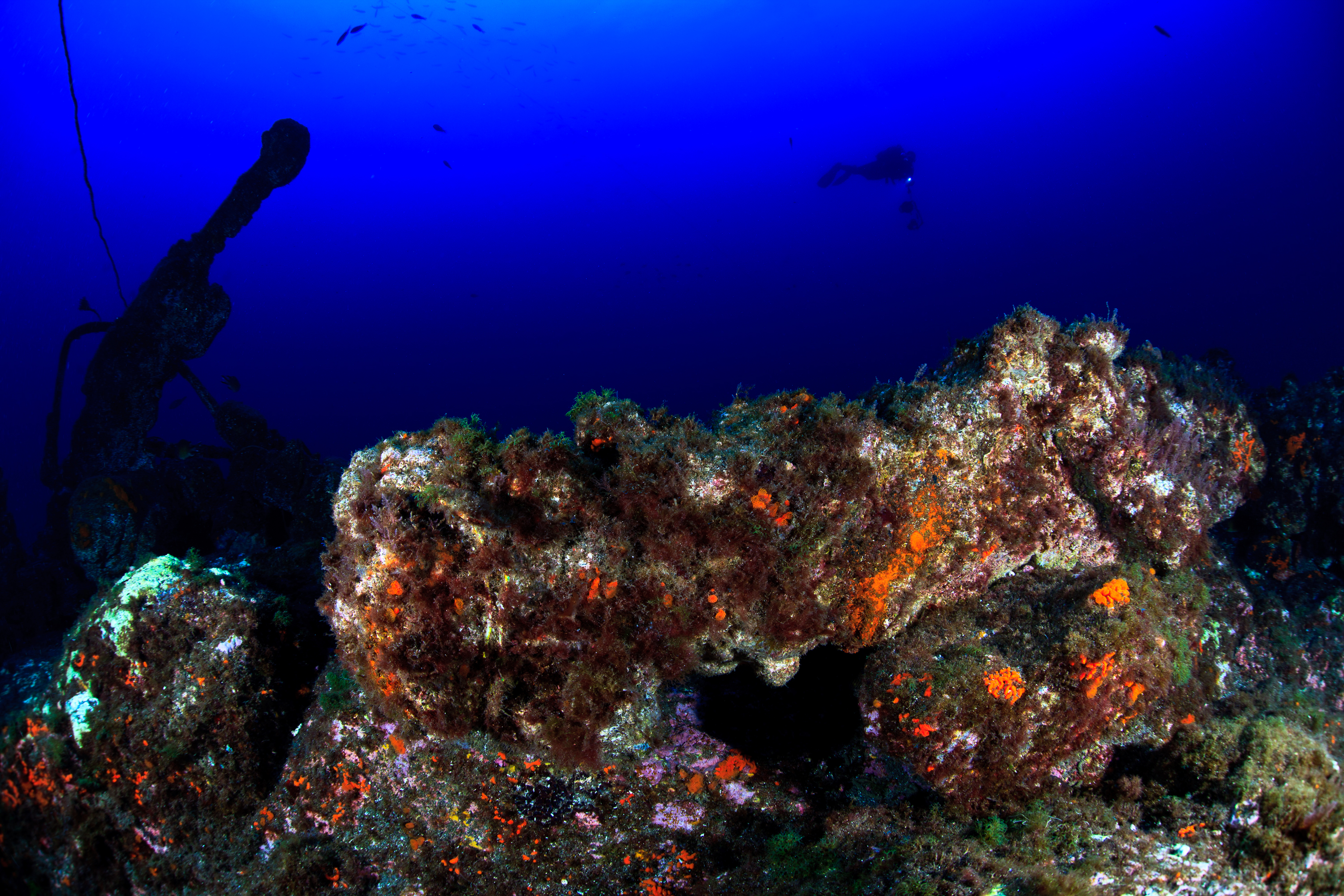
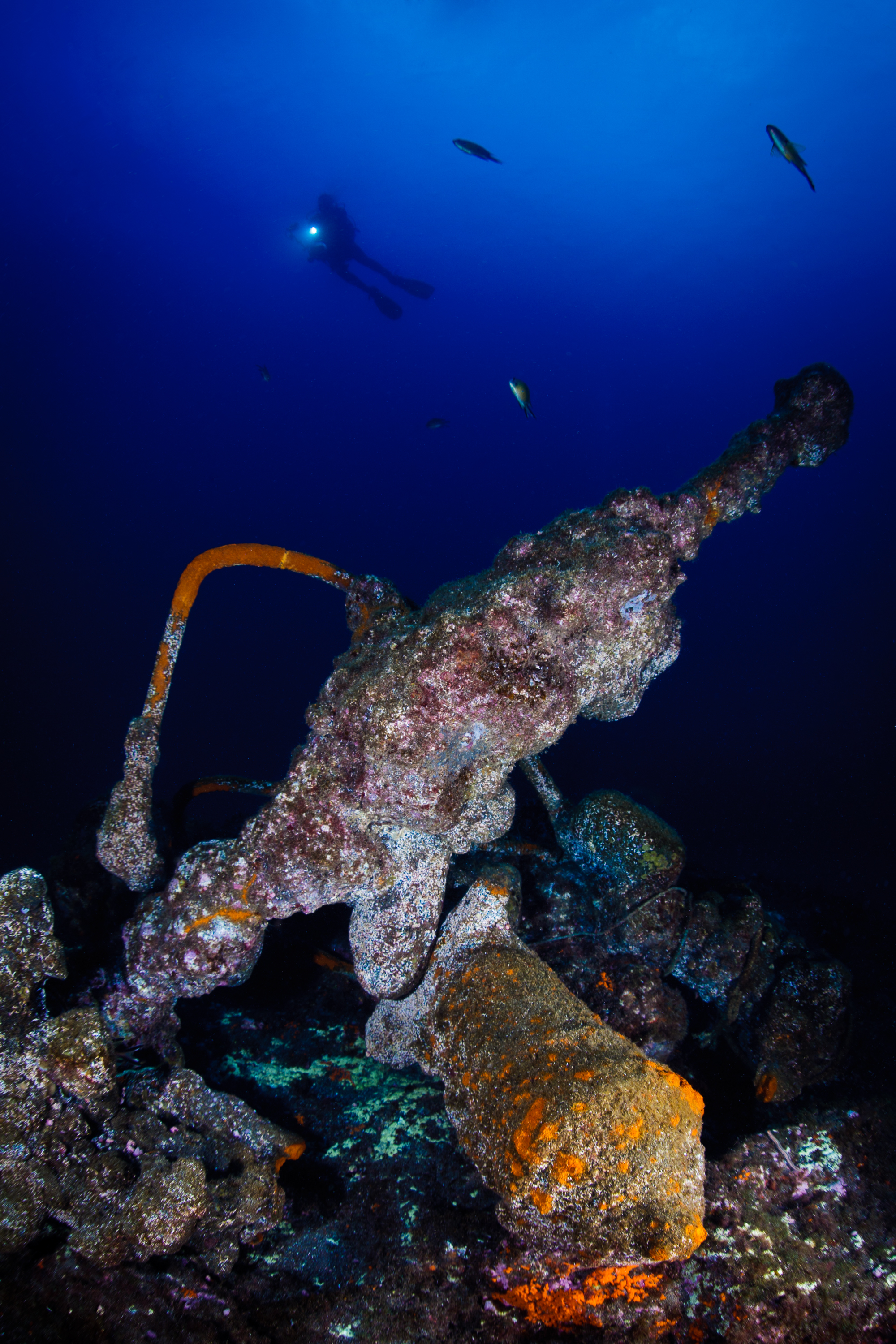
Ships that became something else. The Numidia and Aida at Brothers Islands buried in soft corals, the legendary Umbria in Port Sudan filmed by Hans Hass in 1949, and old cannons off Faial. Human-built things the ocean decided to keep.
The wrecks that started it
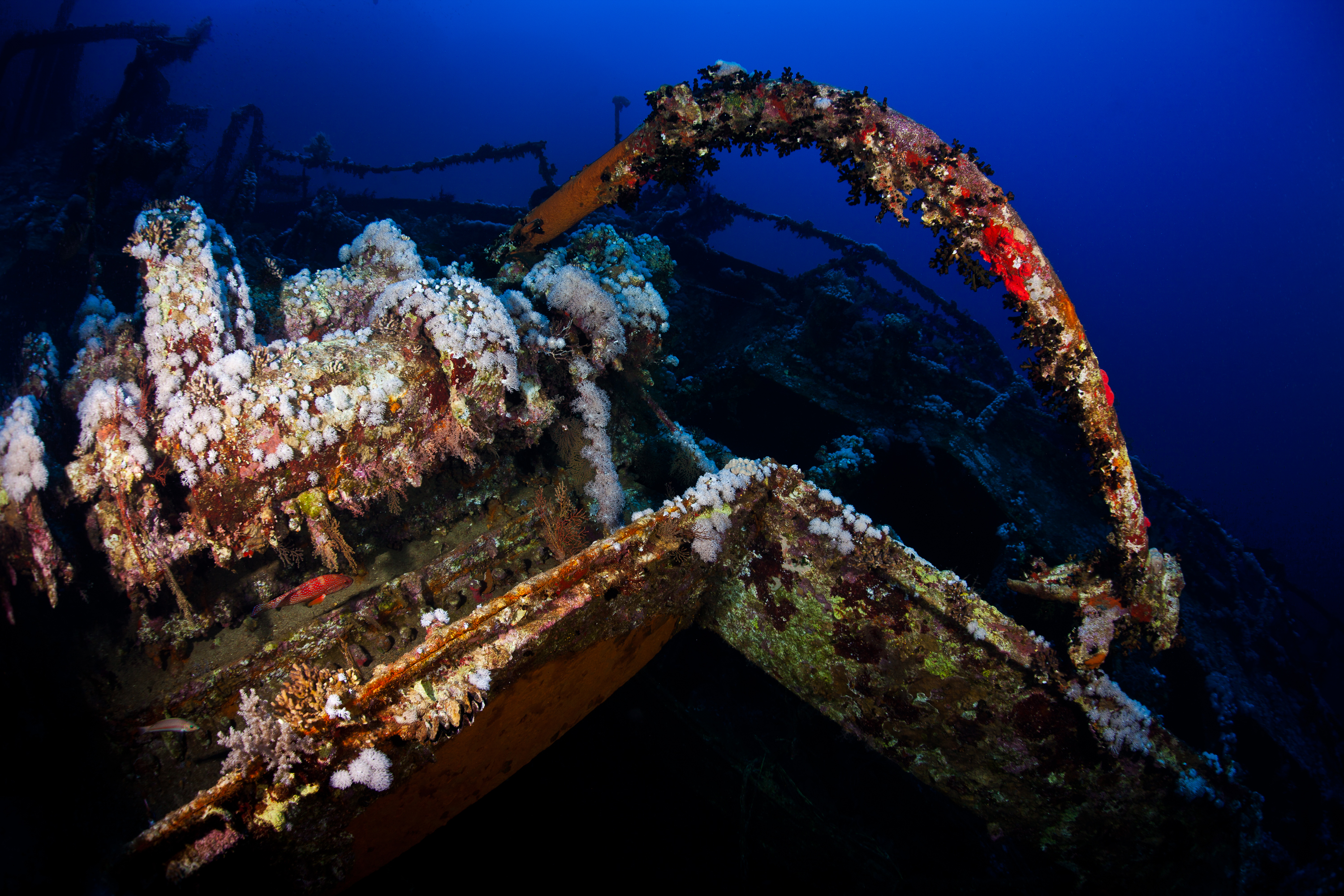
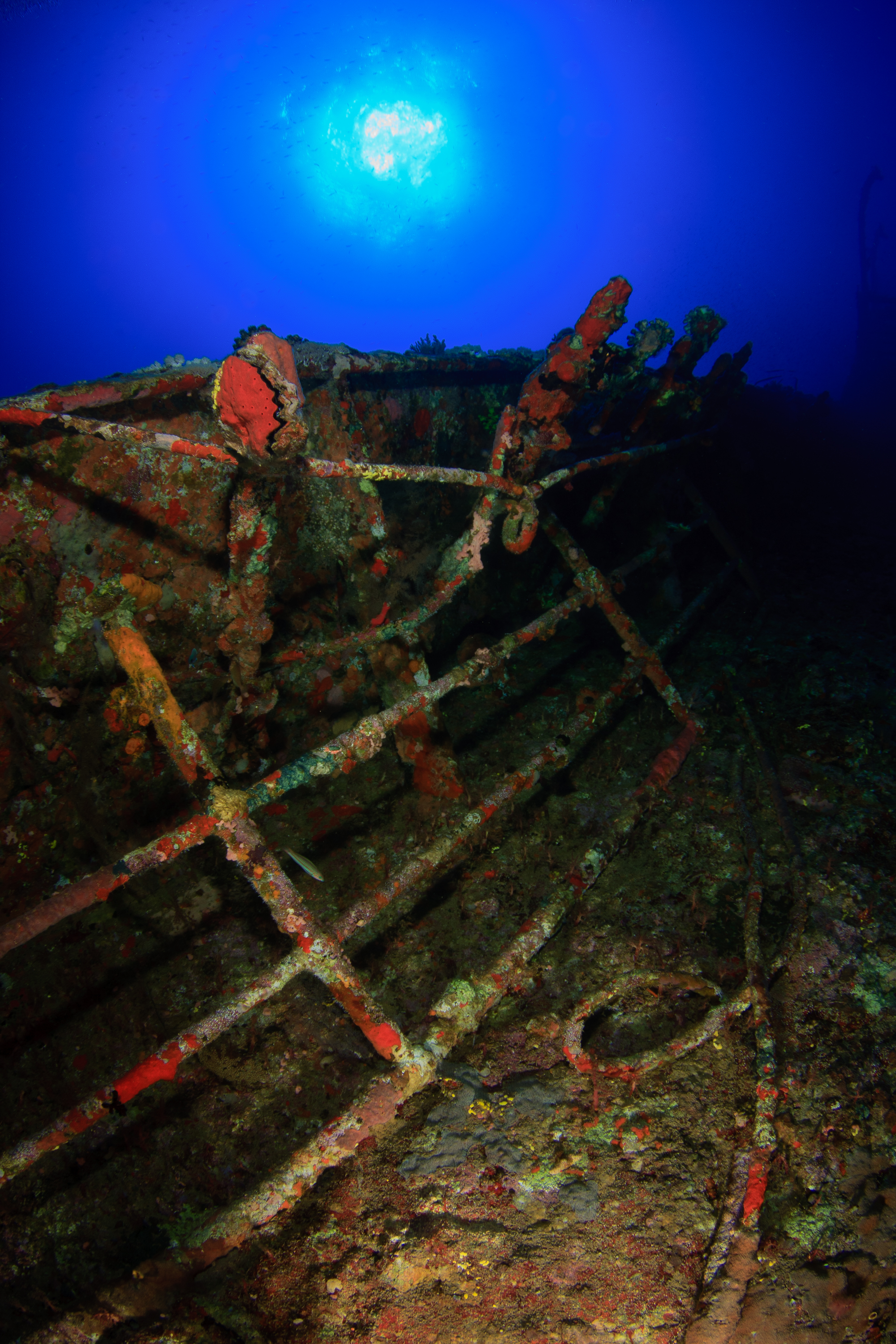
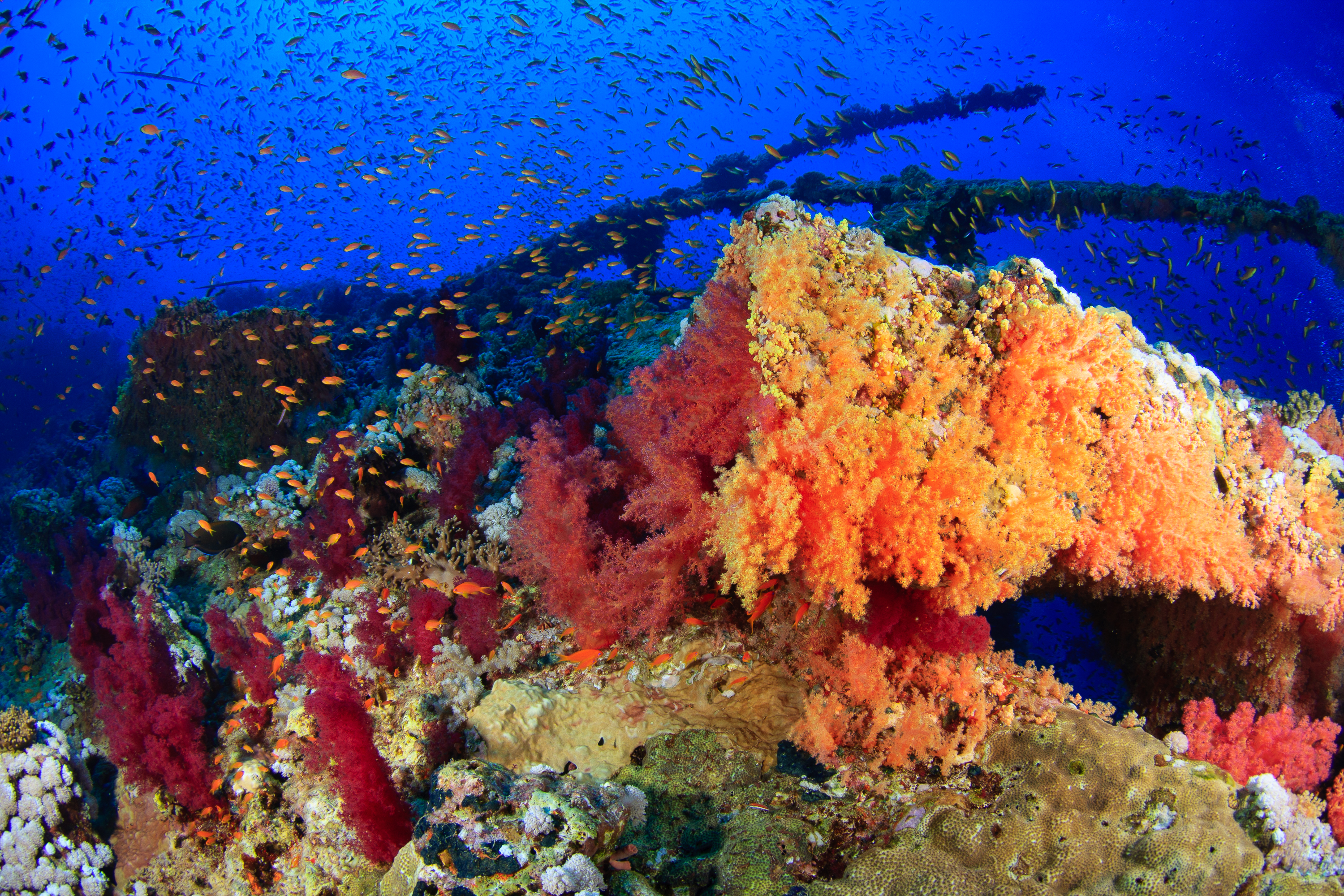
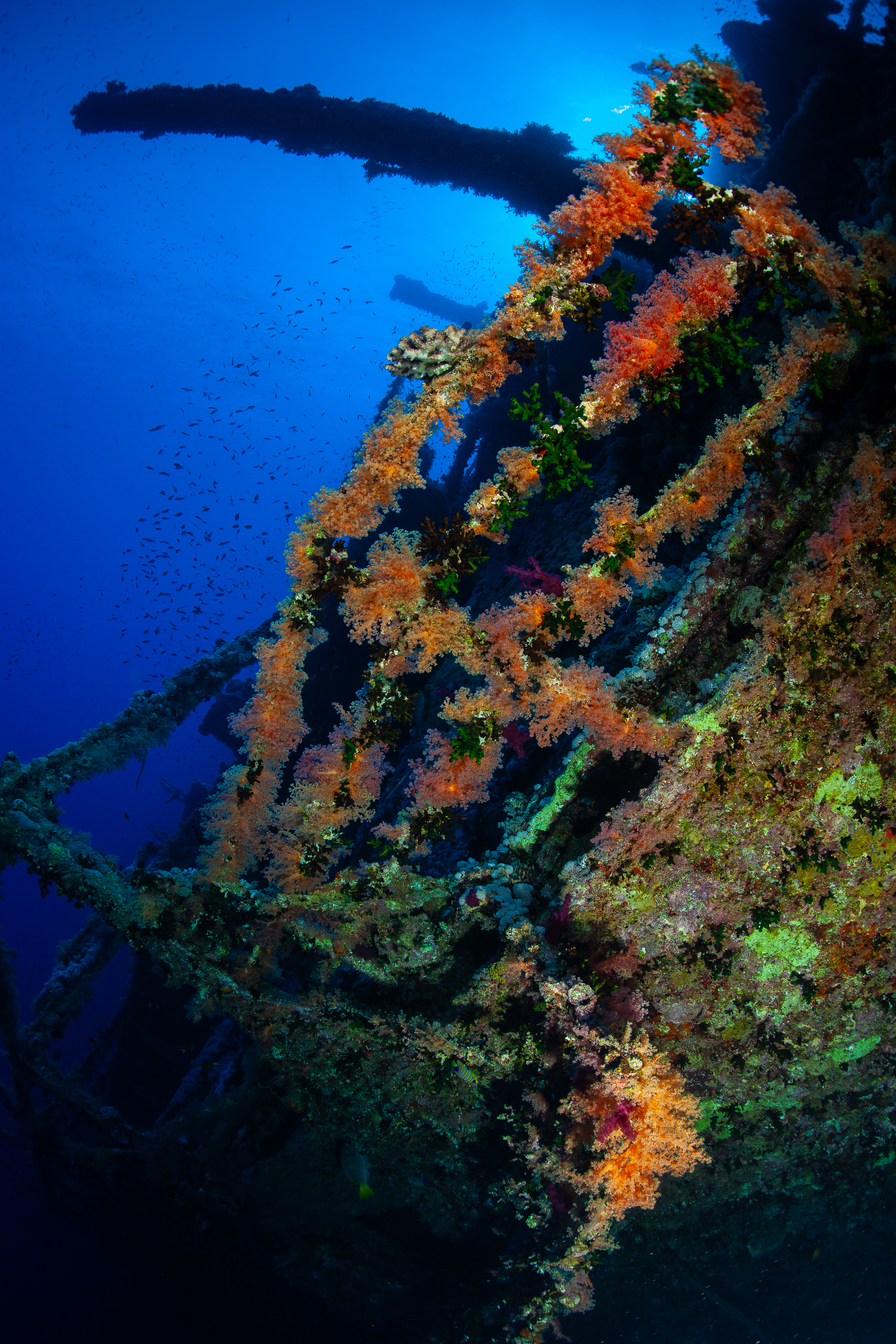
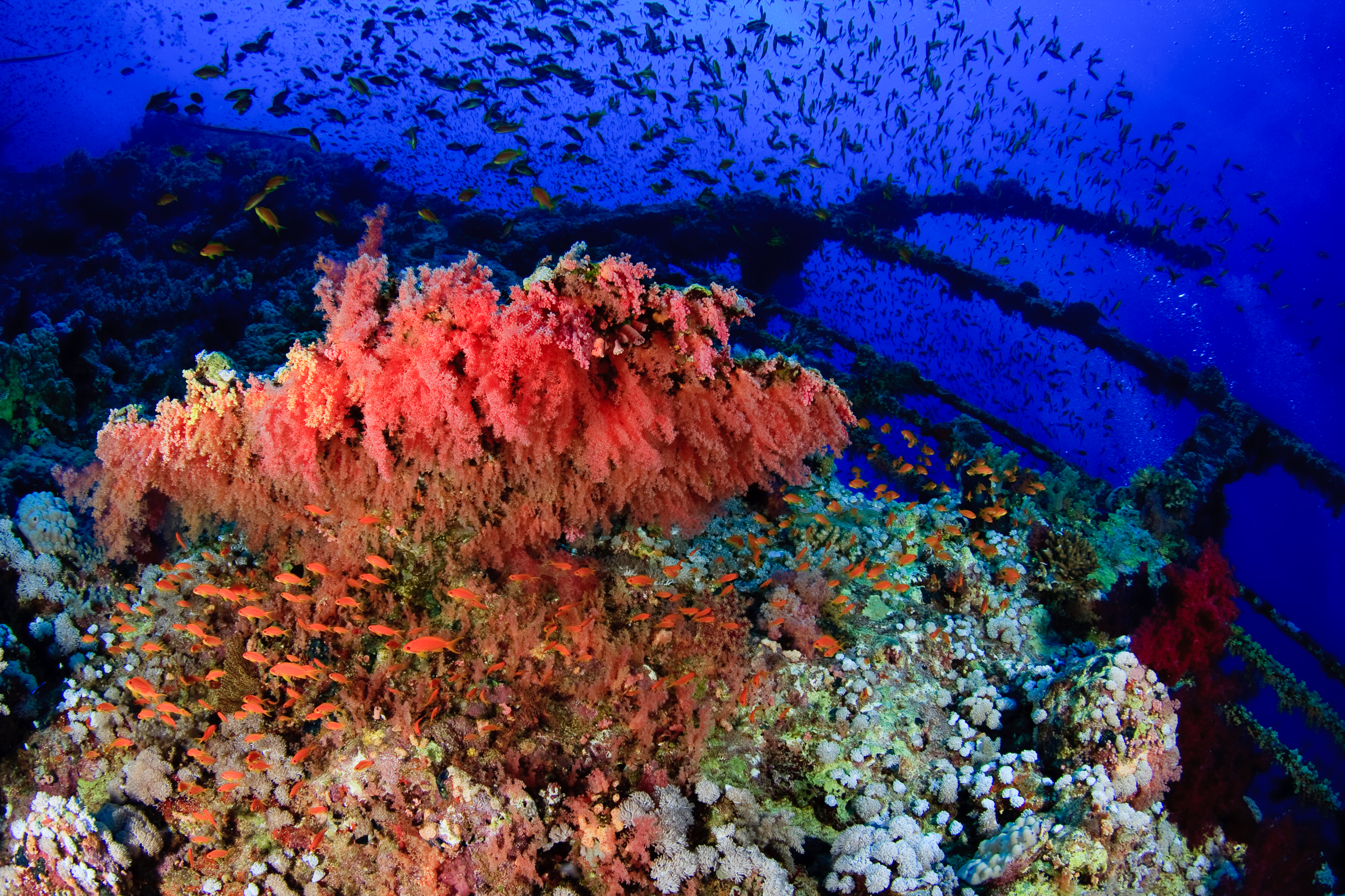
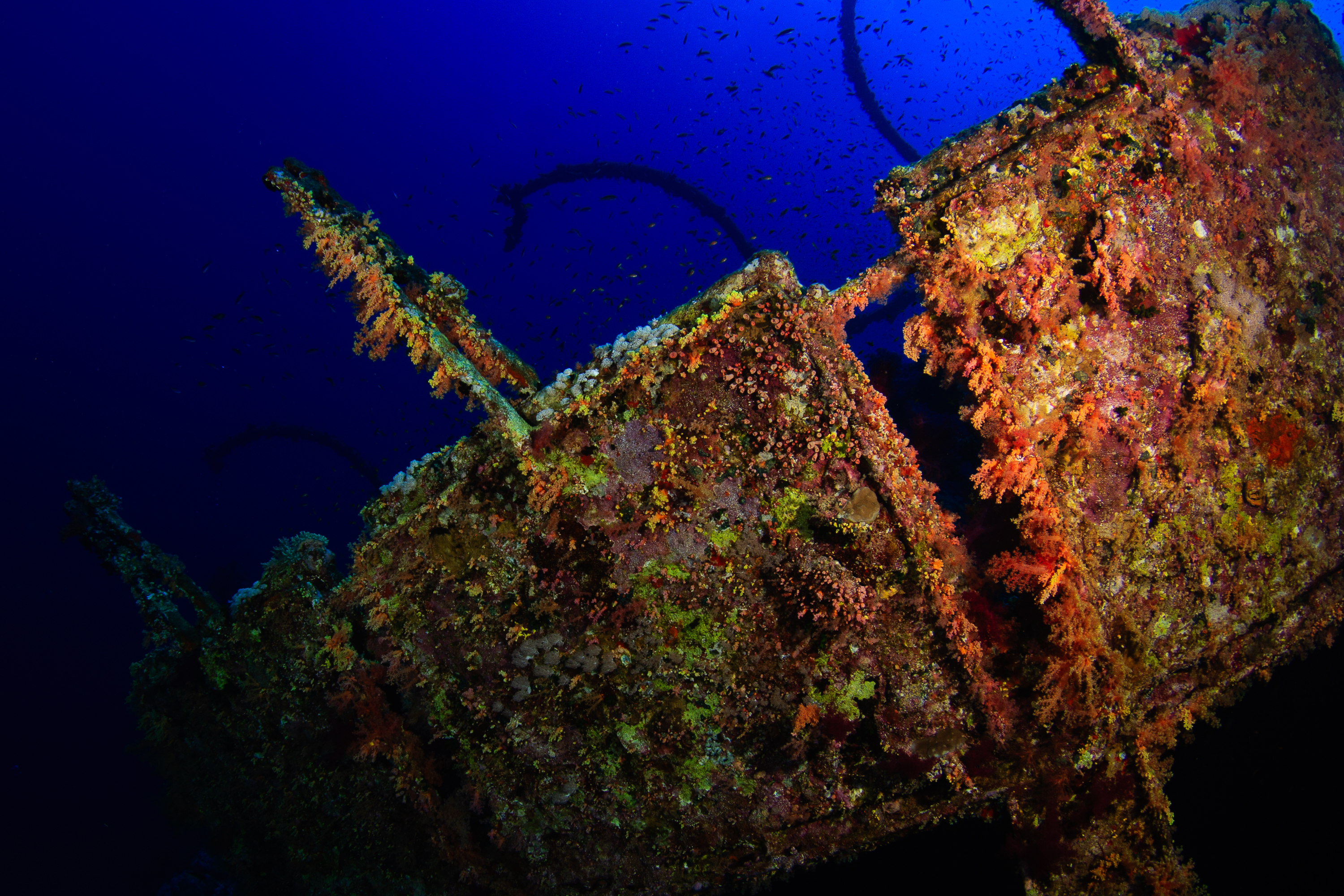
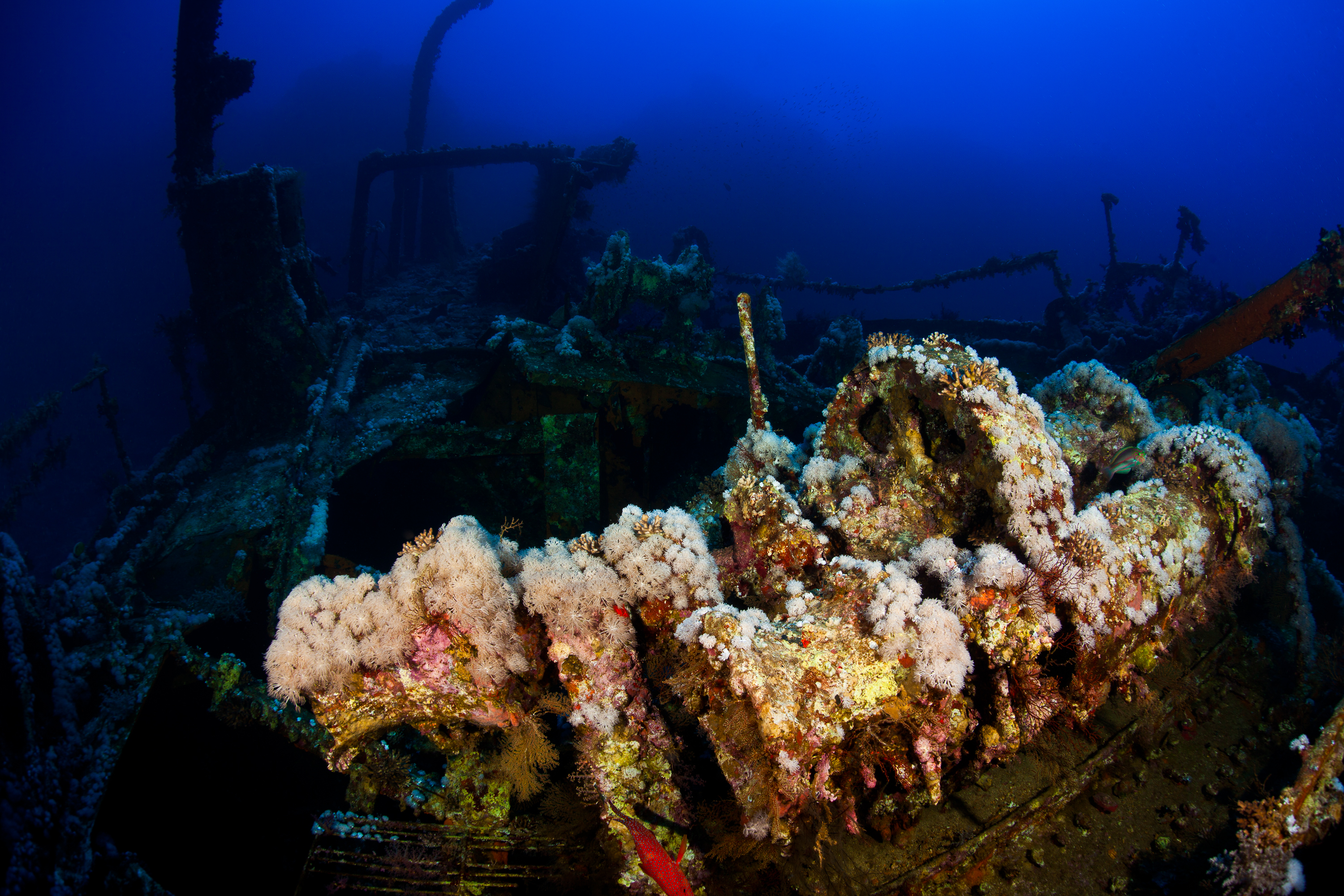
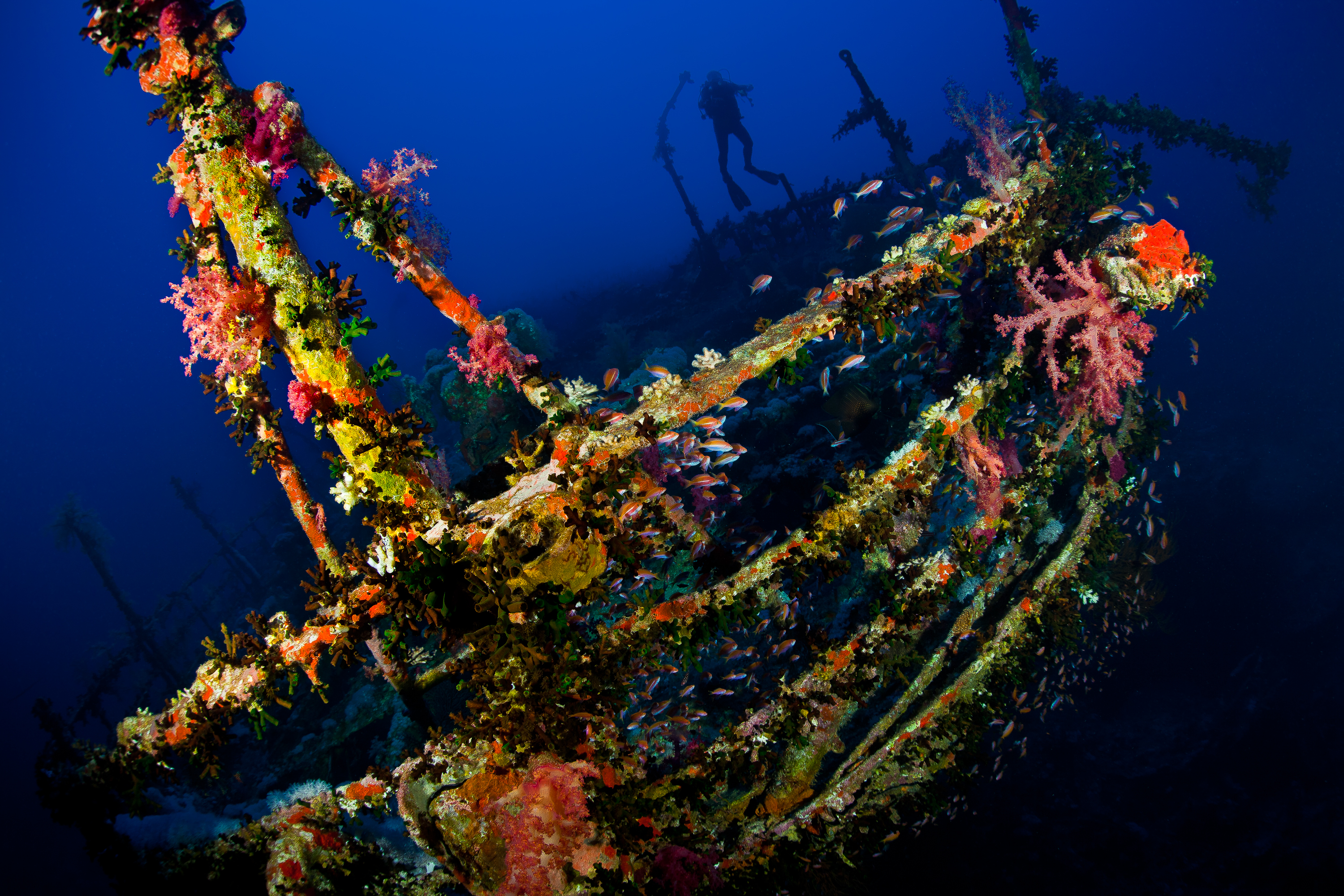
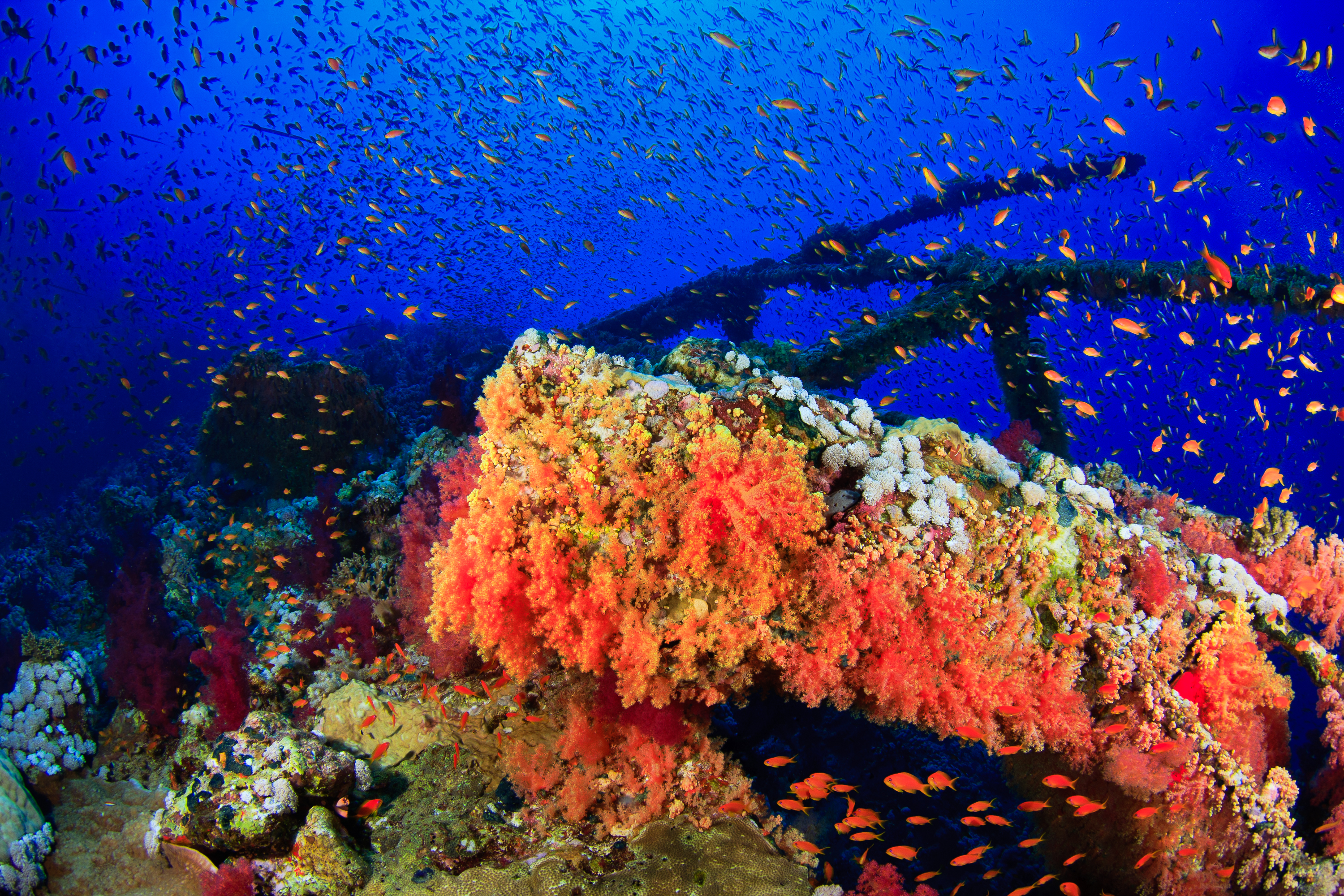
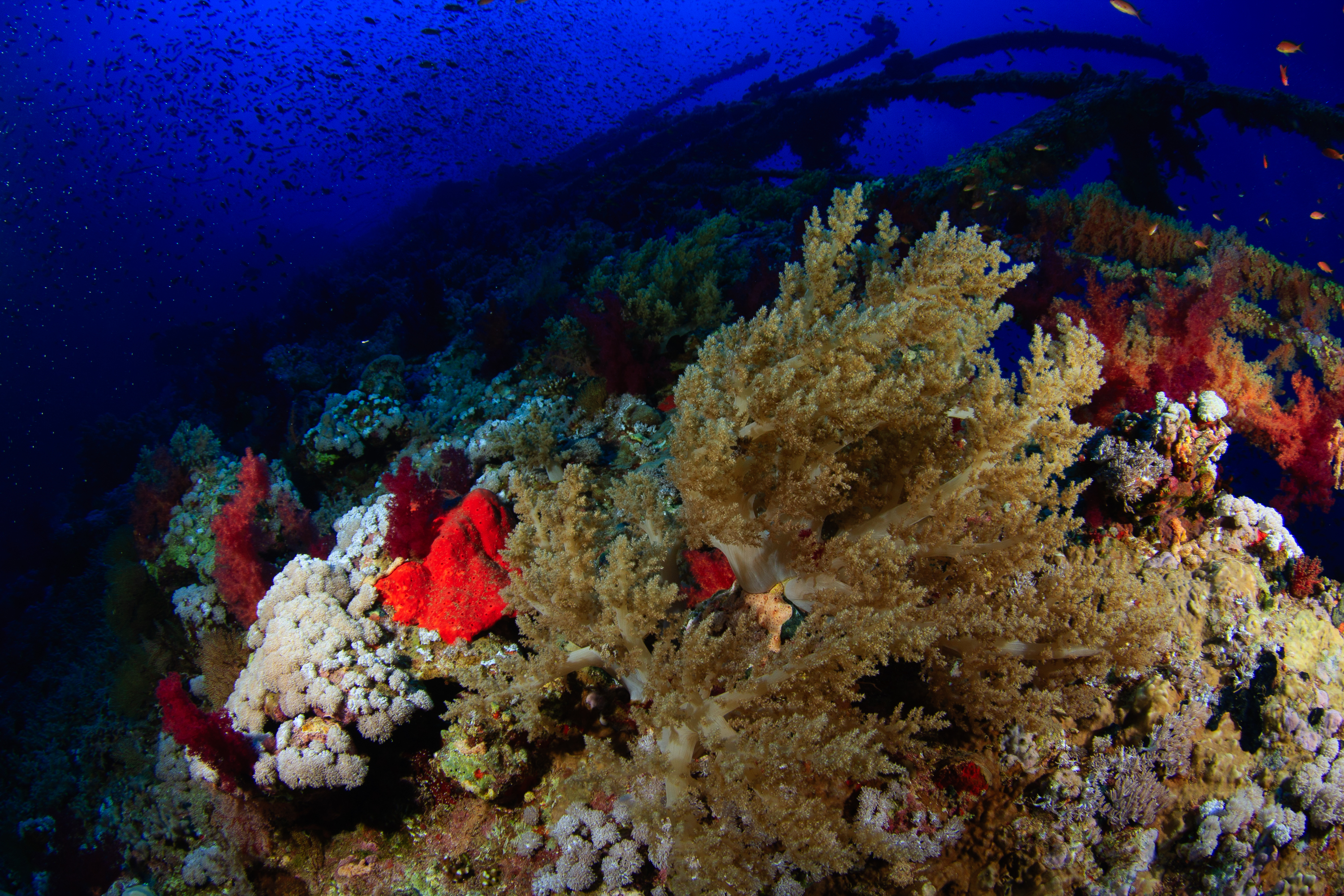
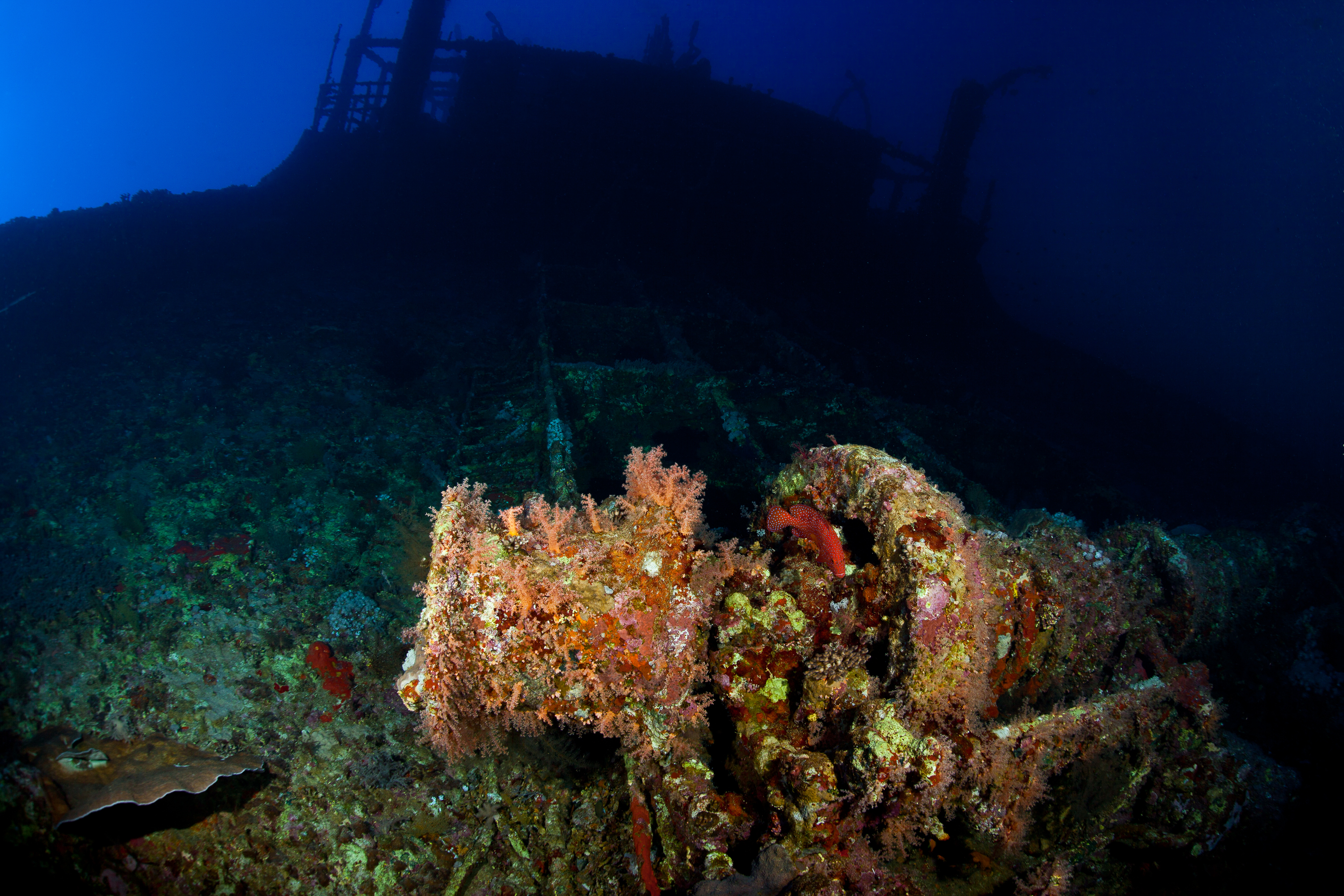
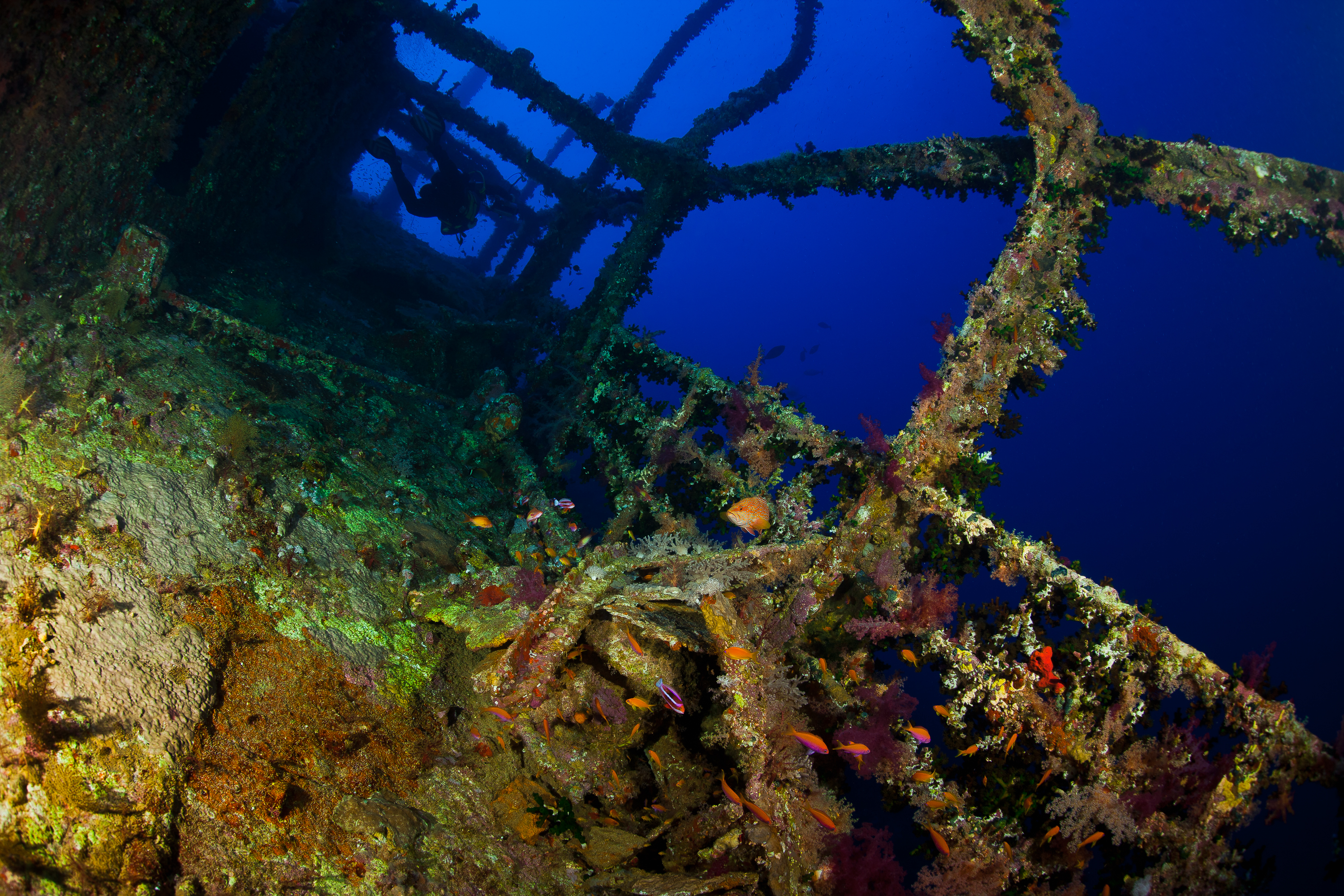
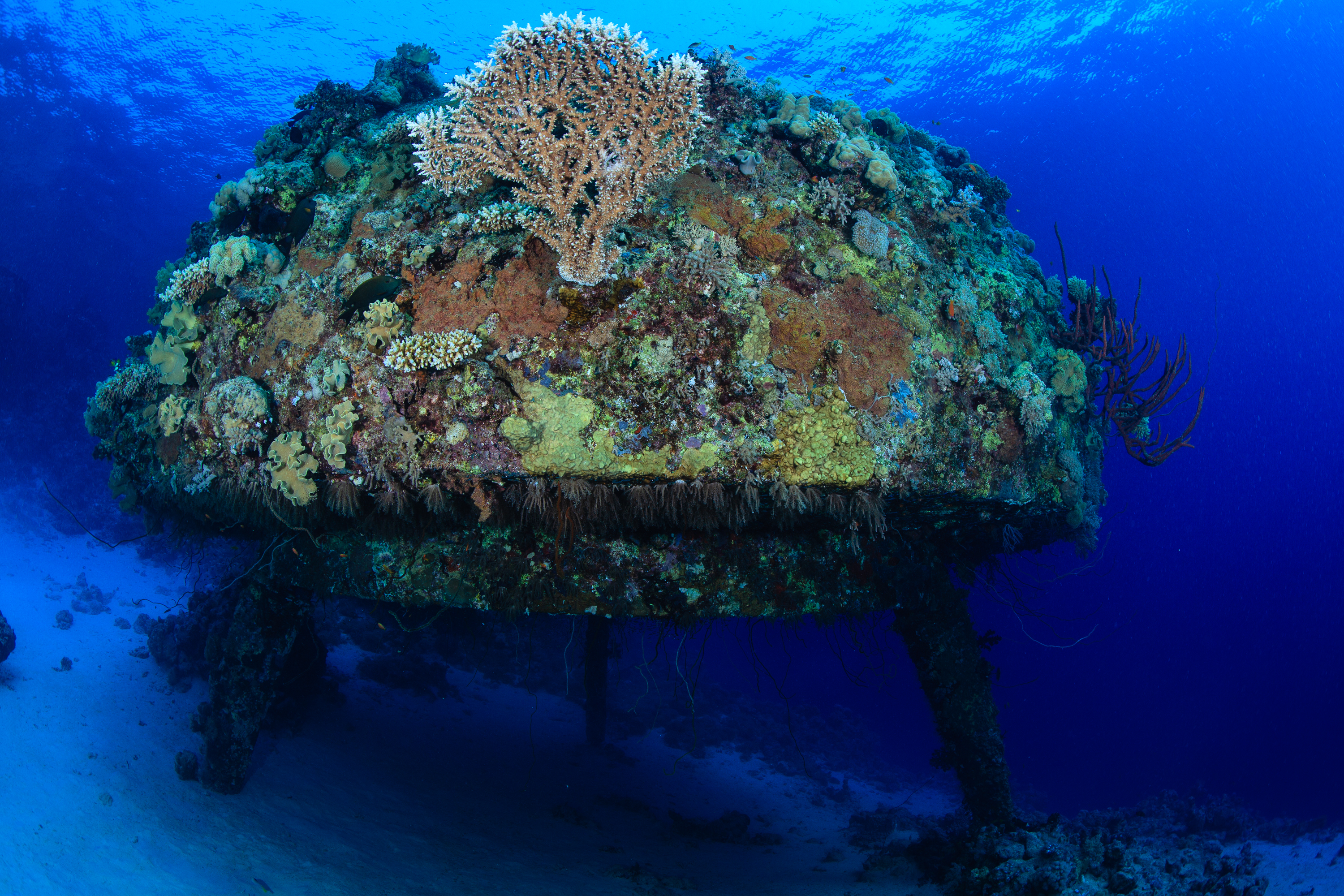
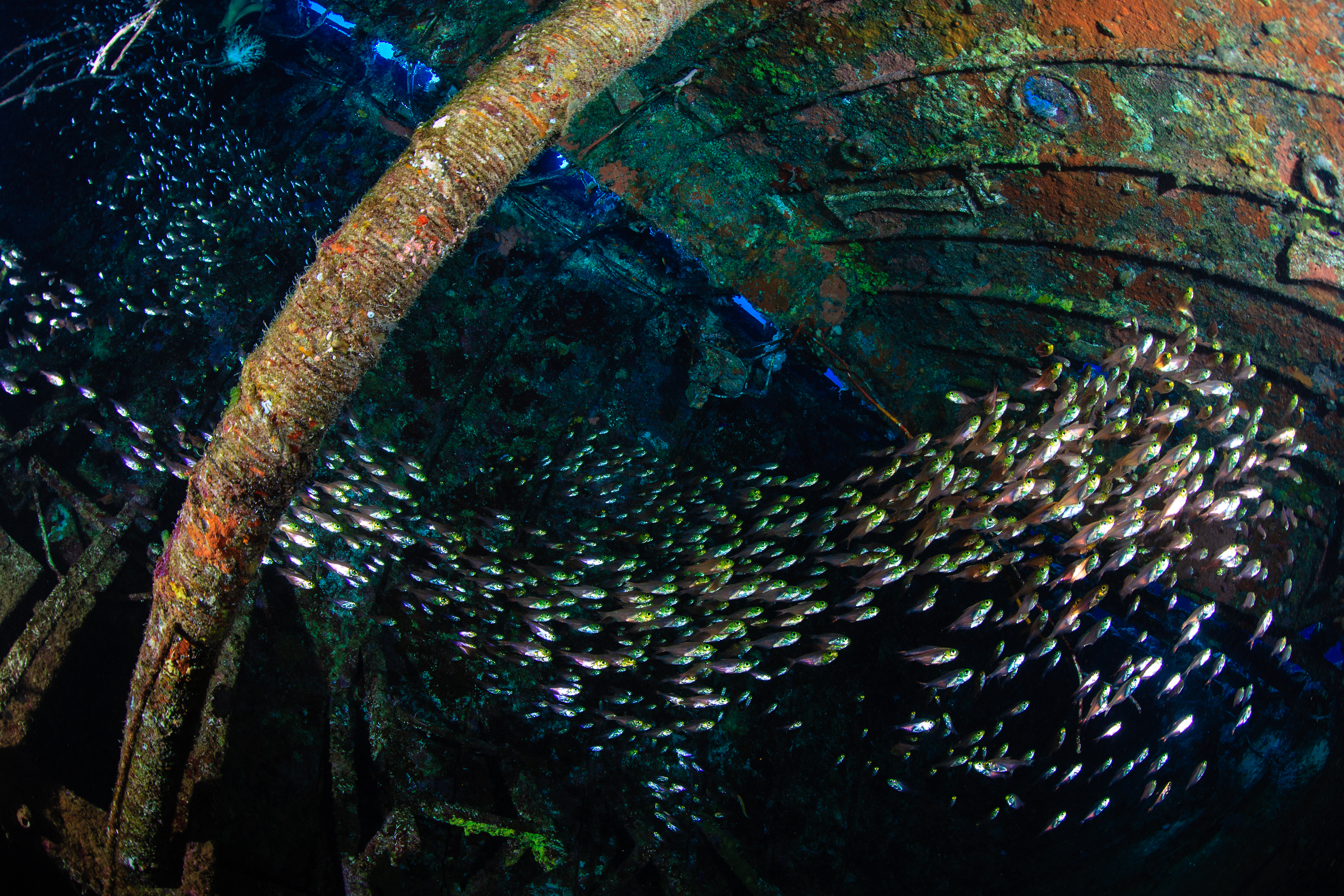
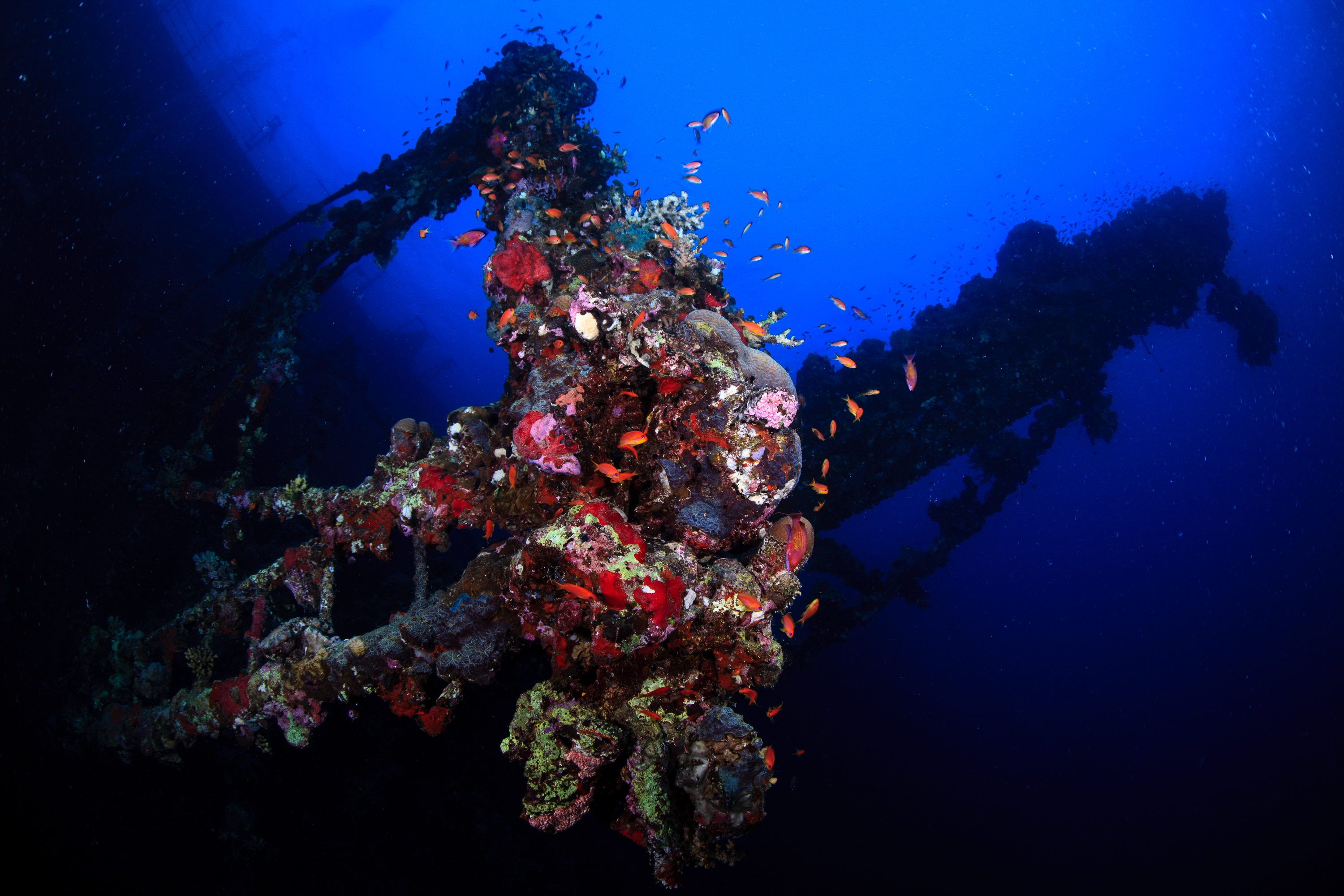
Brothers Islands, Red Sea, as a kid. The Numidia was the first real wreck I ever explored. She sits on a steep wall, exposed to current, covered in soft corals so thick you forget you are swimming along a ship. The reef has taken her back almost completely. The Aida, just around the corner, is quieter at first. But drop deeper and the blue turns dark, the structure grows mysterious, and the wreck stops being scenery and starts being a place with its own atmosphere. I came up seeing wrecks differently. Not debris. Structures with a second life, and stories the ocean hasn’t finished telling.
Ships that became something else. Human-built things the ocean decided to keep.
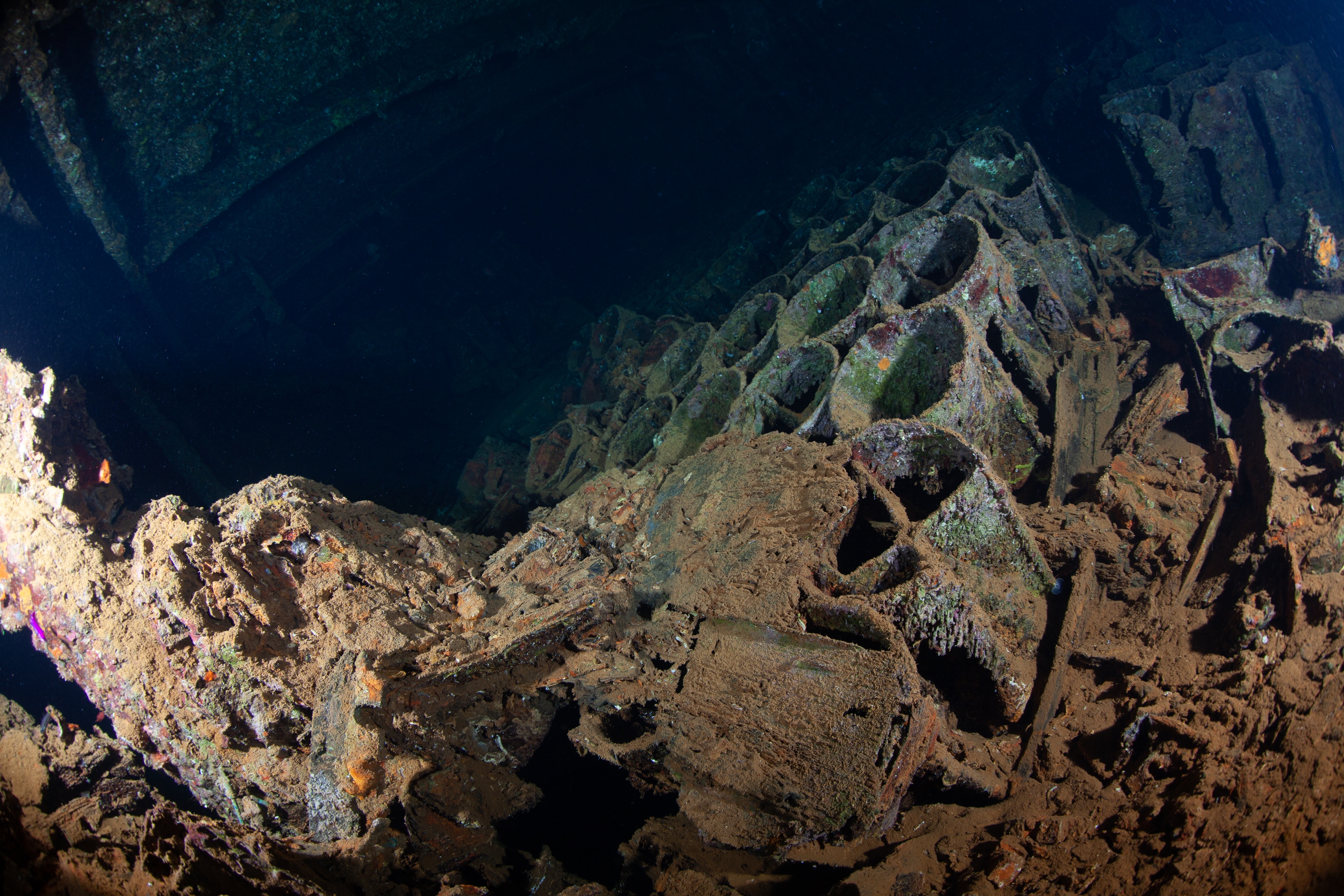
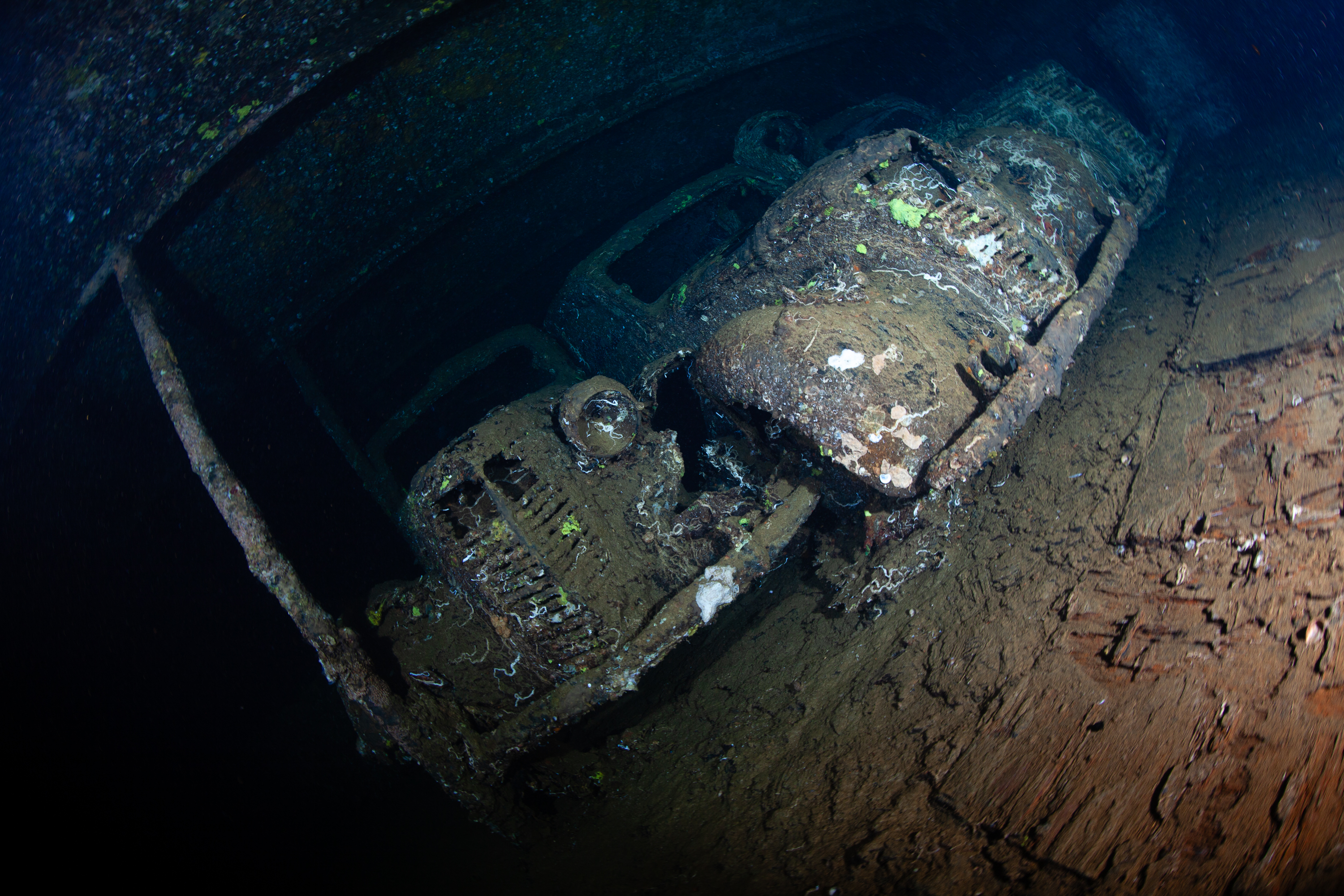
My most treasured wreck is the Umbria in Port Sudan. Her Italian captain scuttled her at Wingate Reef in 1940 rather than lose her cargo. She went down upright and has barely moved since. Hans Hass filmed her in 1949, and his footage turned the Umbria into one of diving’s great legends. Swimming through her cargo holds today, past crates of bombs, trucks, wine bottles still stacked where they were loaded more than eighty years ago, you feel the weight of that history in a way no documentary can deliver.
The wreck image I’m after
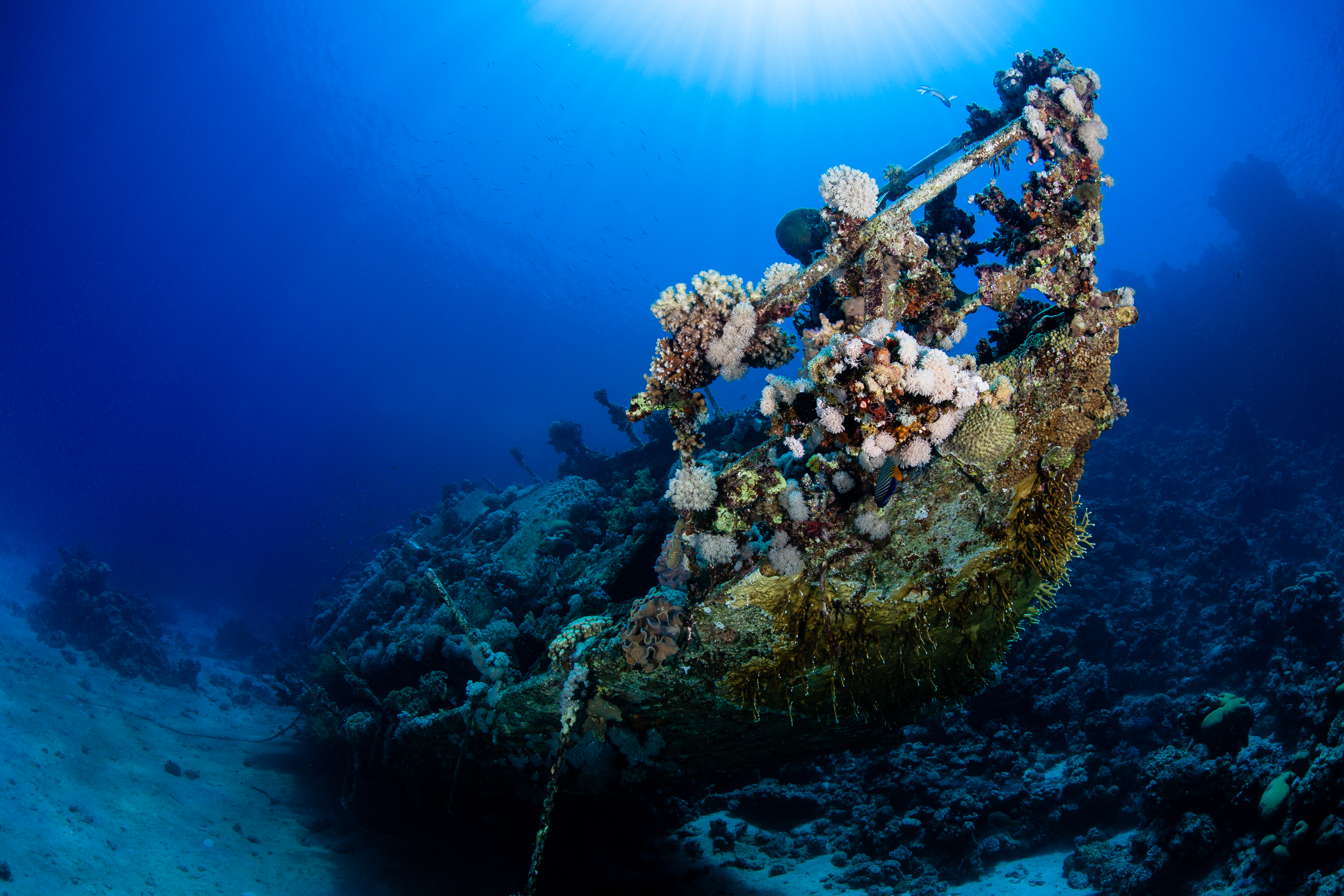
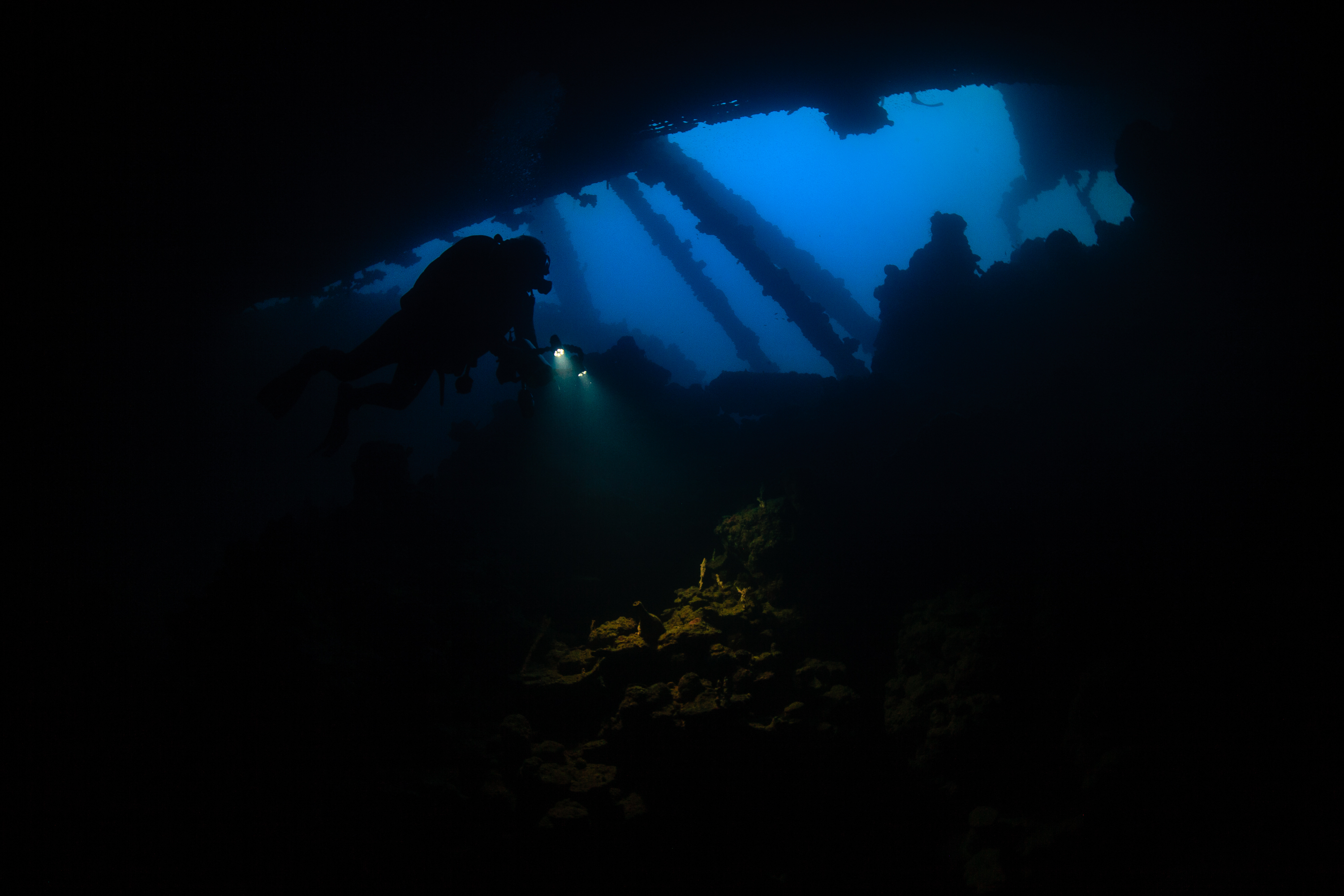
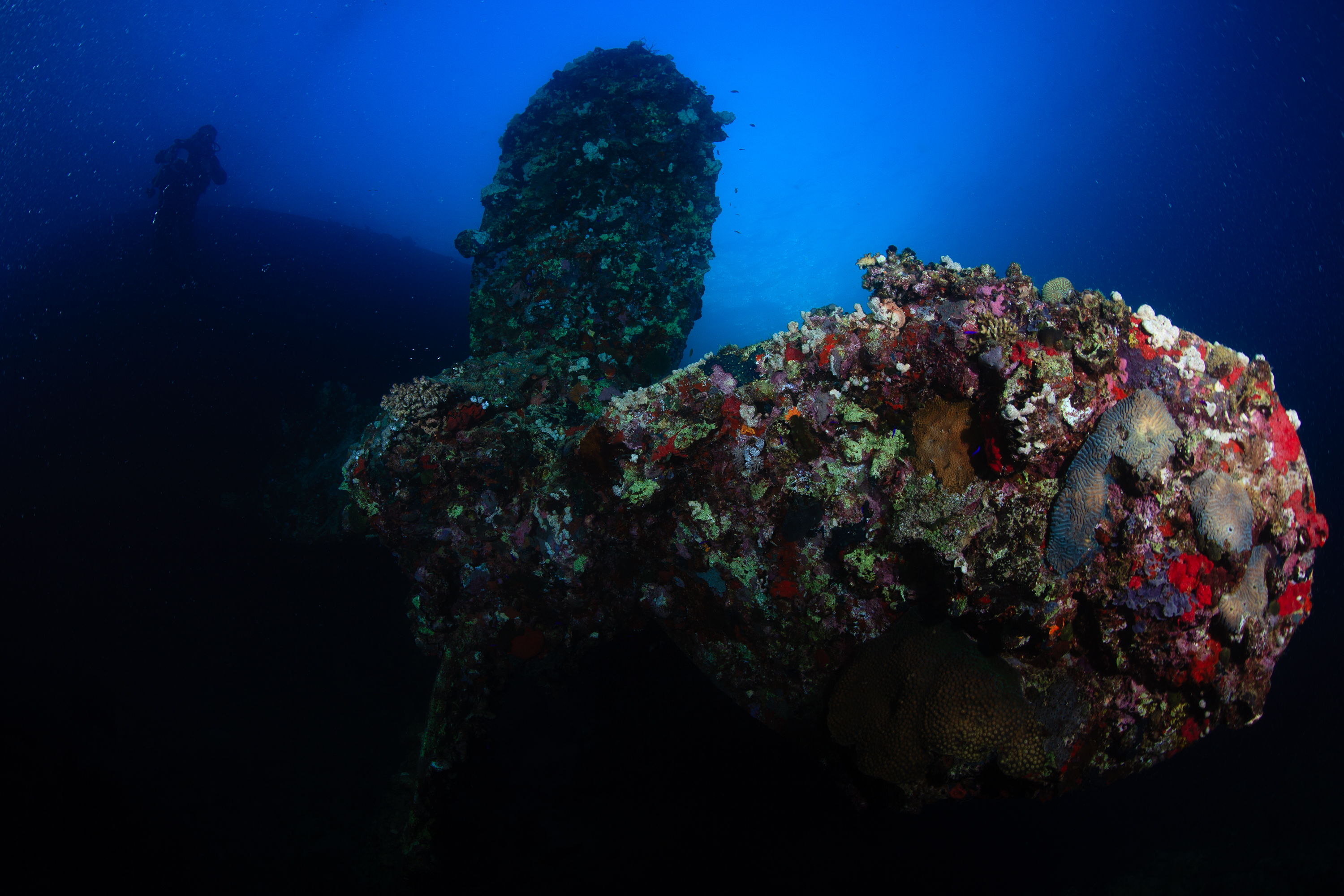
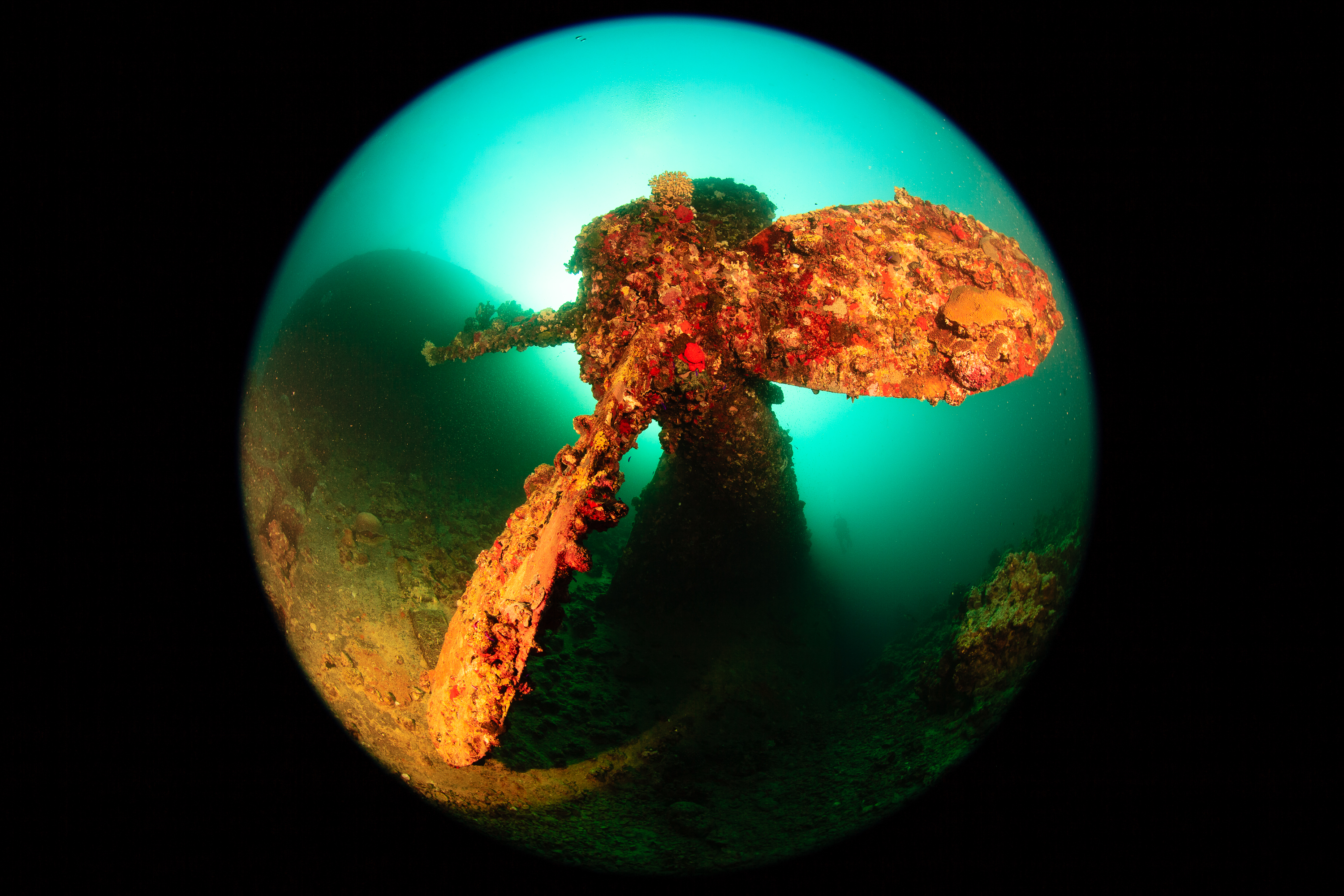
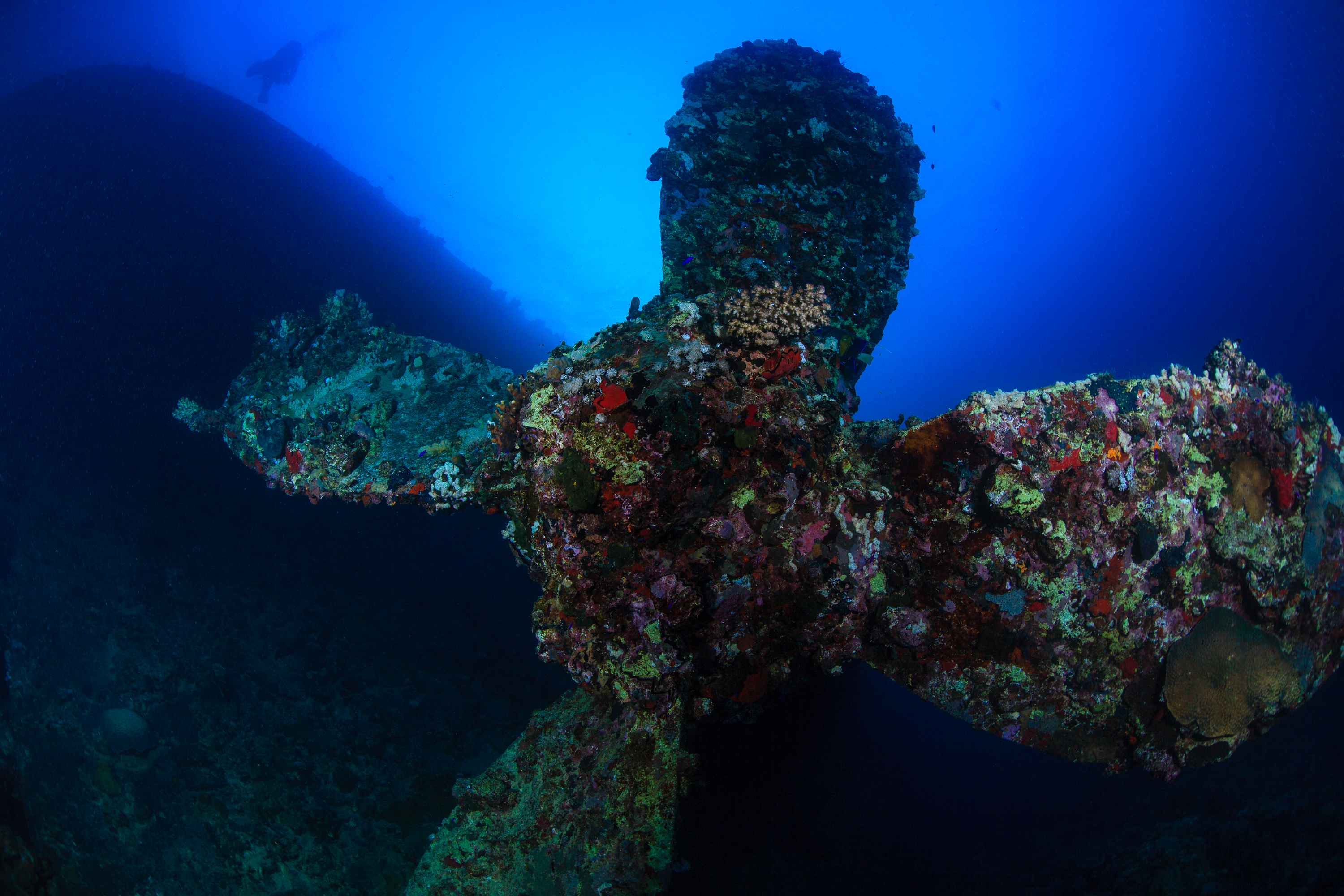
Not the wide shot that says “there’s a ship down here.” The detail that says what happened to it. Soft corals claiming a railing. A propeller blade disappearing into blue. A diver framed in a doorway that was never meant to be open water.
Some wrecks belong visually with Reef & Corals because the reef has nearly won. Others sit closer to the quiet darkness of Caves. And on remote reefs like Brothers, wreck dives share the same current and anticipation found in Sharks. Truk Lagoon is still on the list. A fleet of wartime ships in a Pacific lagoon, coral-covered and untouched. Until then, I keep returning to the wrecks I know and watching the reef write another year over the steel. More about how these places fit the wider journey on the About page and in My Big Five for Life.
Explore More Galleries
Sharks